
Last updated November 2, 2026
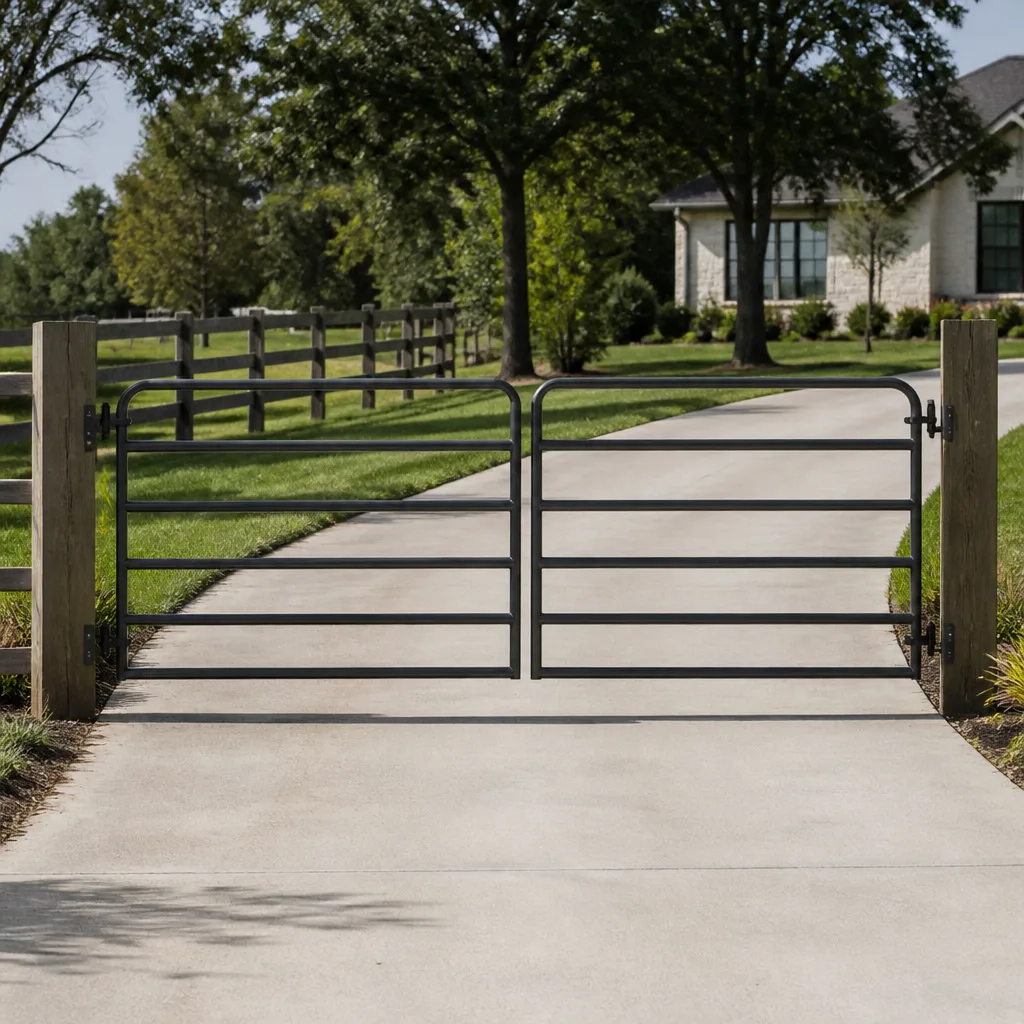 Farm & ranch
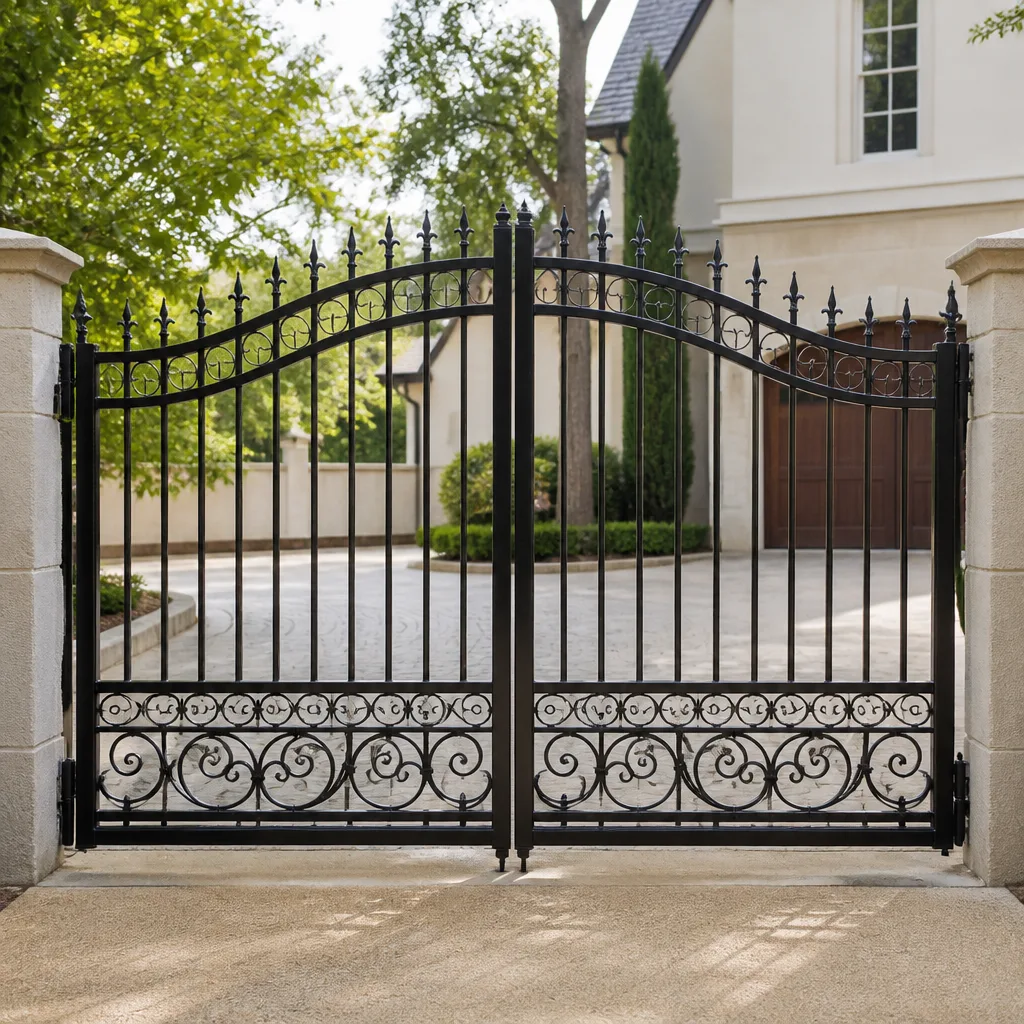 Wrought iron
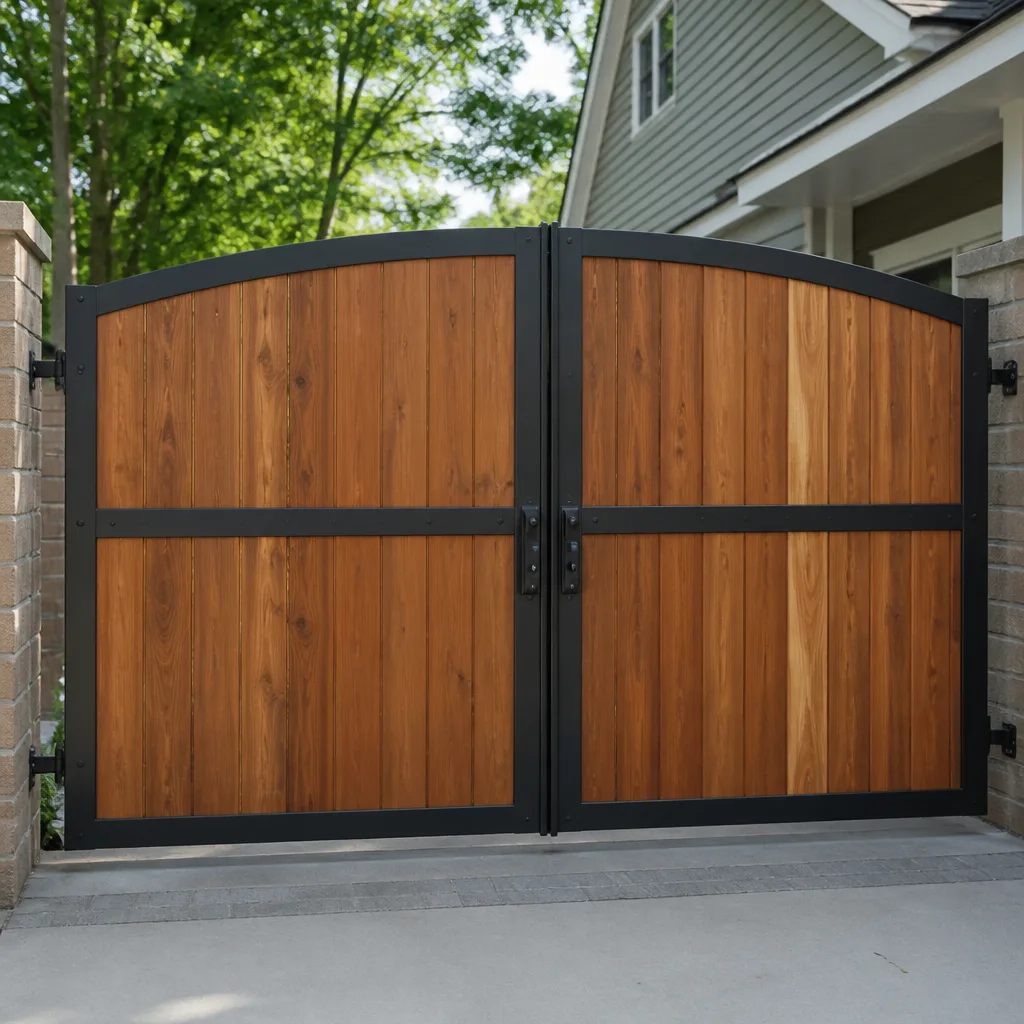 Wood & steel frame
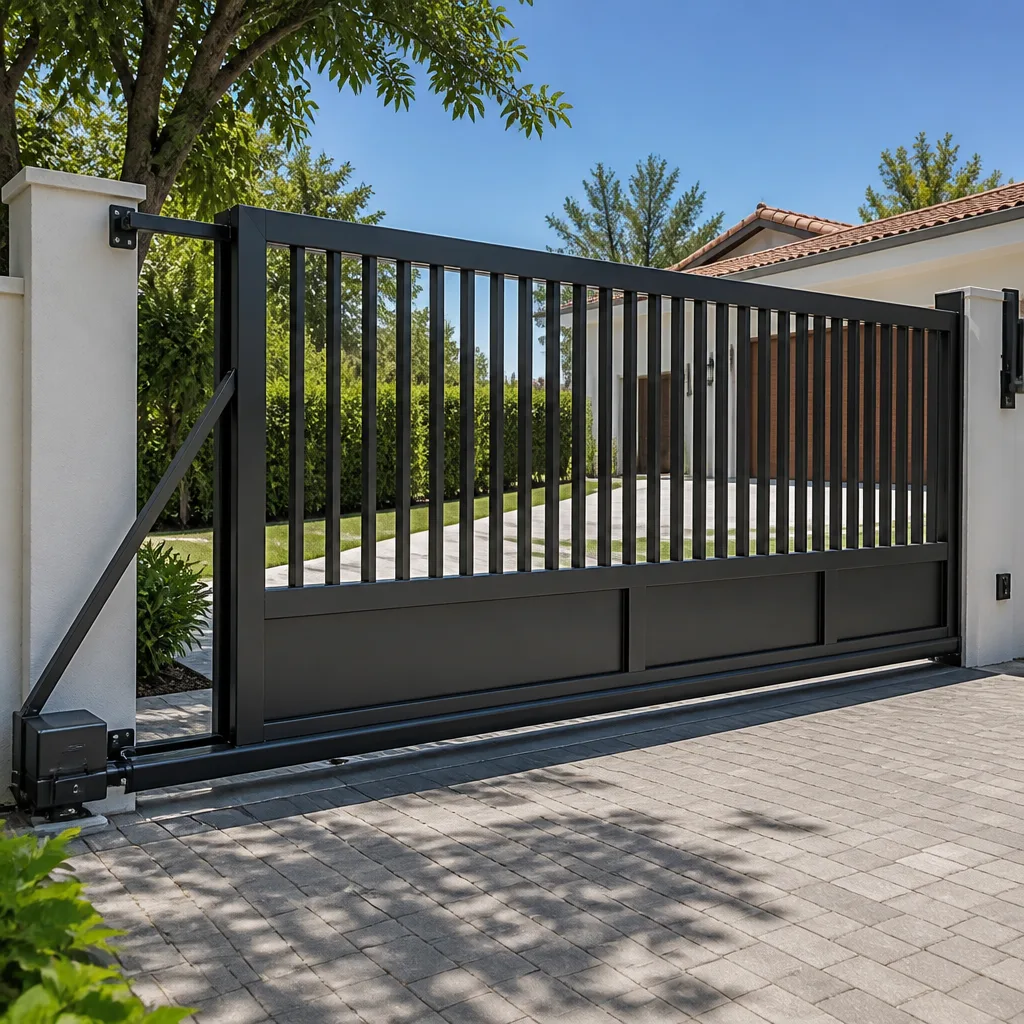 Sliding driveway gates
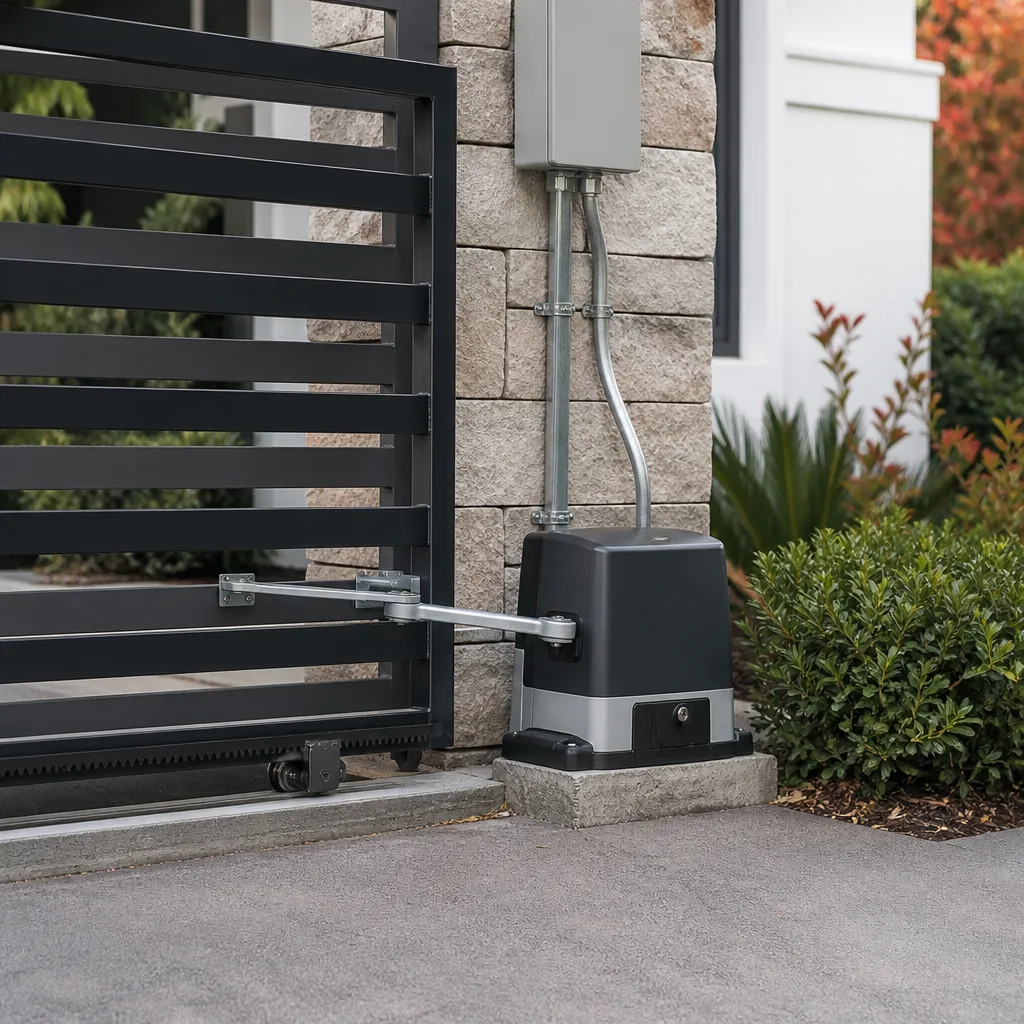 LiftMaster operators
Free on-site gate assessment - hinges, posts, and your LiftMaster or Nice gate operator checked before anything is quoted
The assessment is free and the quote is the invoice.
Get your free estimateHow to Hire a Gate Repair Contractor in Rancho Bernardo: A Step-by-Step Guide
Ask any contractor to name the error code your LiftMaster SL3000UL throws when the secondary entrapment sensor loses continuity. If they pause, you’re talking to someone who learned gates from a YouTube video. That pause is the difference between a $200 diagnostic visit and a $2,000 repair cascade. Rancho Bernardo has no shortage of general contractors and garage door companies that list “gate repair” on their website because the search volume looks good. What the area has far fewer of: technicians who can look at a FAAC board and tell you whether the capacitor is failing or the limit switch drifted. This guide walks you through a five-step vetting process that filters out generalists before anyone sets foot on your driveway. We’re a Gate Repair Rancho Bernardo home specialist, and we’ve written this so you can hire the right person the first time, whether that’s us or someone else who clears the bar.
Quick Answer
To hire a Gate Repair in Rancho Bernardo contractor, verify their California C-61/D28 license classification and at least $1 million in general liability insurance, then ask brand-specific questions about your operator (LiftMaster, DoorKing, FAAC, Linear, and others) before booking. A qualified gate specialist should identify your system’s power source, cycle count, and loop detector setup during the phone call, and provide a written, itemized estimate after a site visit. Skip any contractor who can’t name the manufacturer of your operator from a photo or who quotes a price without seeing the gate first.
Styles & brands we work with
- Wrought iron
- Wood & steel frame
- Farm & ranch
- Sliding driveway gates
- LiftMaster operators
Table of Contents
- Step 1: Verify the License Class and Insurance Minimums
- Step 2: Ask Brand-Specific Questions on the Phone
- Step 3: Listen for Diagnostic Questions About Your Gate’s Setup
- Step 4: Decode the Written Estimate Line by Line
- Step 5: Know What a Proper Site Visit Looks Like
- Common Mistakes to Avoid
- When to Call a Professional
- Frequently Asked Questions
Step 1: Verify the License Class and Insurance Minimums
In California, gate repair falls under the Contractors State License Board’s C-61/D28 classification, which covers doors, gates, and activating devices. A general building contractor (B license) can legally take the job, but that tells you nothing about gate-specific competence. The license class you want to see is a C-61 with the D28 specialty or an equivalent classification that explicitly names gate operators. Ask for the license number on the first call, then check it against the CSLB website. It takes sixty seconds.
Insurance is the second non-negotiable. We recommend requiring at least $1 million in general liability coverage. Automatic driveway gates in Rancho Bernardo are heavy, motorized, and often tied into access control systems that serve multiple properties in HOA communities like Bernardo Heights or The Trails. If a technician shorts a control board and the gate stays locked open overnight, the liability exposure is real. Ask for a certificate of insurance with your name or property listed as the certificate holder. Any legitimate contractor will send it without hesitation.
Workers’ compensation insurance matters too, and not just for the technician. In California, if an uninsured worker is injured on your property, the claim can land on your homeowner’s policy. Ask whether the contractor carries workers’ comp. If they hesitate or explain why they don’t need it, move on.
- License classification to verify: C-61/D28 (gate and door activating devices) or equivalent.
- Minimum general liability: $1 million.
- Workers’ compensation: Required for any contractor with employees; verify it exists.
- Check the CSLB website: Confirm the license is active, not just that a number exists.
We’ve seen the fallout from skipped verification in Rancho Bernardo more times than we can count. A homeowner in Seven Oaks hired an unlicensed handyman for a gate opener replacement. The opener failed three weeks later. The handyman’s phone number was disconnected, and the homeowner paid twice: once for the botched job, once for us to fix it correctly. The license check would have prevented all of it.
Step 2: Ask Brand-Specific Questions on the Phone
This is the step that separates gate specialists from everyone else. When you call a contractor, have your operator’s brand and model number ready, or at least a photo of the control board. Then ask a direct question: “What experience do you have with a LiftMaster SL3000UL?” Swap in your brand: DoorKing, FAAC, Linear, Ghost Controls, Elite, Mighty Mule. A qualified technician should answer without pausing. The answer should name the brand back to you and include something specific about it, like the common failure point or the board layout.
Here’s what a good answer sounds like when you ask about a DoorKing 9150: “We service those regularly. The most common issue on the 9150 is the limit switch wearing out or the chain tension drifting. We stock the limit switch assembly on the truck.” Here’s what a generalist sounds like: “Yeah, we do all brands. Gates, garage doors, whatever. We’ll take a look.” The second answer tells you nothing.
You don’t need to become a gate technician yourself. You just need to know whether the person on the other end of the phone has touched your specific system before. Ask at least two brand-specific questions on the call. One about the operator. One about the access control integration, if you have a keypad, phone entry system, or vehicle sensor loop.
- Name your operator brand explicitly. “I have a FAAC 400 operator.” Don’t say “an electric gate.”
- Ask what the most common failure is for that model. A specialist will answer immediately.
- Ask if they stock common replacement parts for that brand. This tells you whether a repair can happen same-visit or on a follow-up trip.
- Ask about your access control setup. Keypad, intercom, loop detector, photocell. Name what you have and ask if they work on it.
- Take notes on the answers. Vague answers on the phone will be vague diagnoses on site.
Ghost Controls is a brand we hear about often in Rancho Bernardo because homeowners install the DIY kits and then hit a wall when the automation fails. General repair services often decline Ghost Controls entirely or misdiagnose the issue as a motor failure when it’s actually a board configuration problem. If your system is Ghost Controls, ask your contractor directly: “Do you service Ghost Controls boards?” If the answer is anything other than an unqualified yes, keep looking.
Step 3: Listen for Diagnostic Questions About Your Gate’s Setup
A contractor who doesn’t ask diagnostic questions before quoting a price is guessing. A gate is a system with multiple interacting components: the operator, the mechanical gate structure, the power source, the safety edges, the loop detector, and the access control interface. Any one of these can mimic a failure in another. A technician who quotes a motor replacement without knowing whether your operator runs on 110V or a low-voltage transformer is not diagnosing; they’re selling parts.
Here’s what a qualified gate contractor asks on the first call or during the initial scheduling conversation, following the Seasonal Gate Repair Care for Rancho Bernardo: Year-Round Homeowner’s Guide. How old is the gate? How many cycles per day does it see? Does it run on solar or line voltage? Is there a battery backup? Do you have a vehicle exit loop cut into the driveway, or is exit handled by a keypad or remote? Has the gate been getting slower over time, or did it fail suddenly? The answers to these questions change the diagnosis significantly.
In our experience, slow degradation points to mechanical wear: worn wheels, a sagging hinge, a chain that’s lost tension. Sudden failure points to electrical issues: a blown capacitor, a tripped breaker, a fried control board. A technician who asks about the failure timeline is building a diagnostic picture. A technician who just says “sounds like the motor, we’ll replace it” is rolling dice with your money.
- Cycle count matters. A gate that cycles 50 times a day wears components faster than one that cycles 10. The quote should reflect that reality.
- Power source changes the repair. Solar-powered gates introduce charge controller and battery condition questions that line-voltage gates don’t have.
- Loop detector issues masquerade as operator failures. If your gate won’t close or reopens unexpectedly, the loop detector may be the culprit, not the operator.
- Sudden vs. gradual failure tells different stories. Listen for whether the contractor asks this question at all.
A red flag we watch for in run-downs from Rancho Bernardo homeowners: the contractor who quotes a full operator replacement without ever asking whether the gate itself rolls level. A heavy gate that’s sagging on its hinges will kill a new operator within a year. The mechanical and electrical sides can’t be separated. If your contractor treats them as two unrelated jobs, they’re missing the point, and you’ll pay for it later.
Step 4: Decode the Written Estimate Line by Line
A written estimate is a window into how a contractor thinks. Vague estimates produce vague work. You want line items. Specific line items. A legitimate estimate for an operator replacement in Rancho Bernardo should itemize the operator itself, the labor to remove and dispose of the old unit, the labor to install and program the new one, any wiring or conduit work, and any parts like safety edges or battery replacements. If the estimate is one line that says “gate repair – $1,800,” you have no idea what you’re paying for.
Diagnostic fees are a legitimate part of the trade, but they should be disclosed up front and applied toward the repair if you proceed. A contractor who charges a diagnostic fee, then also charges a separate “trip charge” on top of the same visit, is double-billing. Ask how the diagnostic fee works before you book the appointment. If the answer is evasive, that’s your answer.
Bundled labor is normal for some jobs. Rebushing a hinge and adjusting the chain might be grouped under “mechanical tune-up.” That’s fine. What’s not fine is an estimate that bundles unrelated fixes under a vague label. If the contractor can’t explain, in plain English, what each line item covers, the estimate is not specific enough.
- Itemized operator replacement: Operator unit, removal of old unit, installation, programming, safety testing. Four to six line items.
- Itemized mechanical repair: Specific parts named (wheel, hinge, chain, track), labor to install each, adjustment time. If the parts aren’t named, ask for names.
- Diagnostic fee policy: Disclosed before the visit, applied toward repair if you proceed, not stacked with a trip charge.
- Warranty terms: Labor warranty and parts warranty should be stated in writing, with durations, not described verbally.
When a ‘diagnostic fee’ becomes a soft upsell: the technician arrives, spends ten minutes looking at the gate, tells you the circuit board is “probably” bad, and then quotes a replacement board plus labor without ever testing voltage at the board terminals. That’s not a diagnostic. That’s a sales visit. A real diagnostic involves a multimeter, a load test on the capacitor, and a continuity check on the safety circuit. The written estimate should reflect evidence, not guesswork.
Step 5: Know What a Proper Site Visit Looks Like
A qualified gate technician follows a sequence on site. It’s not mysterious. It’s methodical. Here’s what you should observe, in order, from arrival to written recommendation.
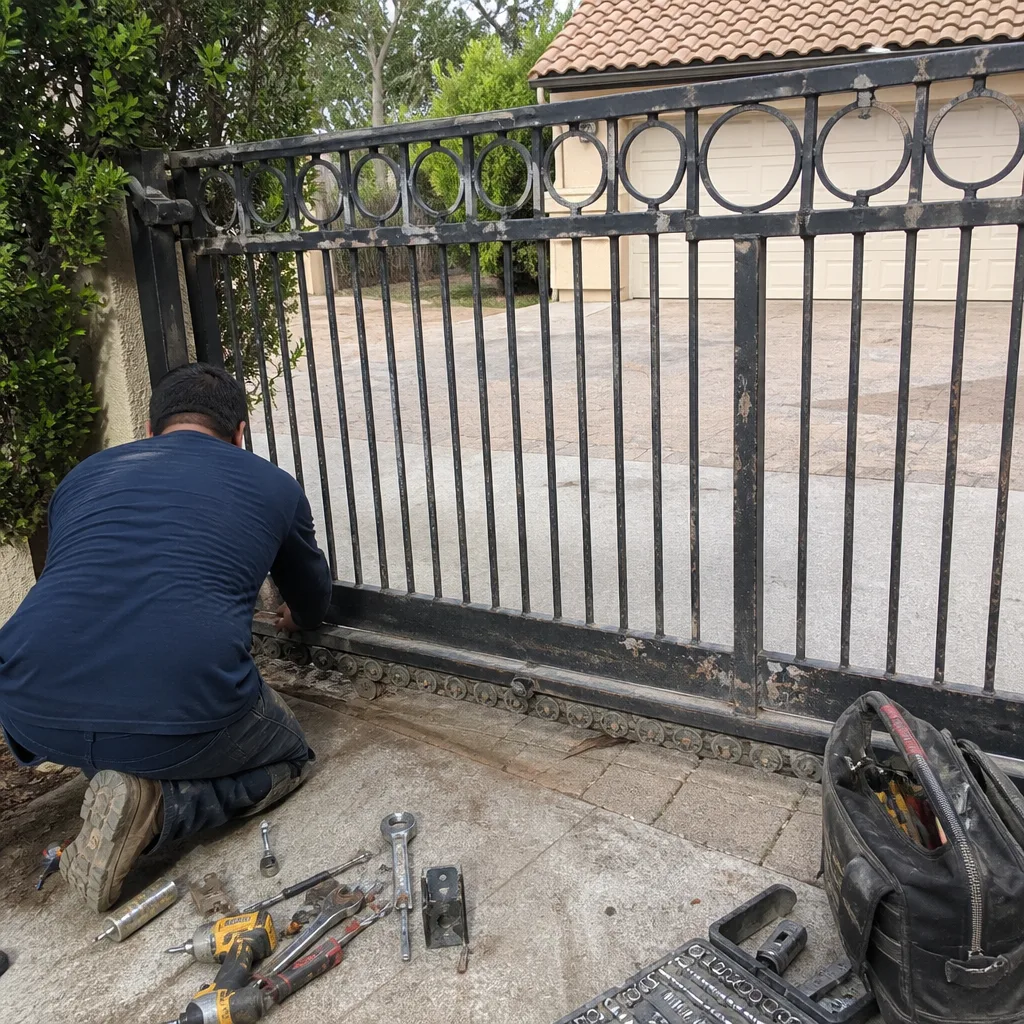
- Arrival and visual sweep. The technician should look at the gate’s full travel path, the hinges, the wheels, the chain or belt, and the overall geometry of the gate structure before touching anything electrical. A sagging gate or a wheel that’s seized will tell half the story.
- Manual operation test. The technician should disengage the operator and move the gate by hand to feel for binding, resistance, or excessive play. This takes two minutes and reveals mechanical issues instantly.
- Electrical diagnostics. Multimeter at the power input. Voltage at the board. Capacitor test. Limit switch function. Safety edge continuity. Photocell alignment. This is where brand-specific knowledge shows up. A technician who knows DoorKing boards reads them differently than a technician who only knows LiftMaster. Both are valid, but your technician should know which board is in front of them.
- Specific diagnosis. The technician should be able to name the failed component and explain why it failed, not just note that the gate “doesn’t work.” A shorted capacitor is not the same as a bad motor, and the repair price differs by hundreds of dollars.
- Written recommendation. You should get a written estimate on site or by email within a few hours. It should be itemized, as described in Step 4, and it should include an option to repair versus replace where applicable, with cost and longevity tradeoffs explained.
This sequence matters because it filters out parts-swappers. A parts-swapper’s process looks different: arrive, glance at the gate, replace the most expensive component, see if that fixes it. If it doesn’t, replace the next most expensive component. You pay for all of it. The methodical sequence above is how an Electric Gate Repair in Rancho Bernardo specialist works, and it’s what you should expect from anyone you hire.
Common Mistakes to Avoid
- Hiring a garage door company that “also does gates.” Electric gate repair is a specialty, not a side job. The operator brands are different, the safety standards are different, and the board-level diagnostics are different. A garage door technician who has never touched a FAAC 400 is not going to diagnose it correctly on the first visit.
- Skipping the license check because the price was low. Rancho Bernardo has a lot of unlicensed activity in the home services space. The CSLB database is free. Use it.
- Accepting a quote over the phone or by text before anyone has seen the gate. No one can diagnose a gate system sight unseen. A phone quote is a guess with a price attached.
- Not asking about the brand of your operator. If you have a Mighty Mule system and the contractor has only ever installed LiftMaster, you want to know that before they crack open the housing.
- Ignoring the mechanical side of the gate. A new operator on a gate that doesn’t roll smoothly is a short-term fix. The gate structure and the automation system work together. Both need attention.
- Paying for a full replacement when a component-level repair would have worked. Some boards fail completely. Others have a replaceable relay. A contractor who always recommends full board replacement is leaving repair options off the table.
- Not asking about warranty terms in writing. Verbal warranties evaporate. If the labor warranty isn’t on the estimate, it doesn’t exist.
When to Call a Professional
Call a gate specialist when the gate moves unevenly, makes grinding noises, reverses unexpectedly, won’t respond to remotes or keypads, or trips its breaker repeatedly. For more guides & resources, visit our blog. Call immediately if the safety edges or photocells are not functioning, because an automatic gate without working entrapment protection is dangerous to people and pets. Call if the gate is stuck open and can’t be closed manually, since Rancho Bernardo properties with open gates are exposed to vehicle and pedestrian access that shouldn’t be there. Call if your HOA is signaling compliance concerns about the gate’s condition. Gate Repair Rancho Bernardo offers free estimates in Rancho Bernardo – call (855) 532-9392. One call covers the gate and the operator, and we’ll tell you what’s actually wrong before anyone touches a tool.
Frequently Asked Questions
Gate repair in Rancho Bernardo typically ranges from $180 to $400 for minor mechanical fixes like wheel replacements or hinge adjustments, and $600 to $2,500 for operator replacements or control board failures, depending on the brand and whether it’s a residential or commercial system. The range is wide because a DoorKing board repair is materially different from a full LiftMaster operator replacement. Every price we quote is agreed in writing before any work starts. Call (855) 532-9392 for an exact quote – estimates are free.
We service LiftMaster, FAAC, BFT, Linear, Viking, Ghost Controls, DoorKing, Elite, and Mighty Mule systems, covering the full spectrum from DIY residential kits to commercial-grade access control operators. If your system is one of these brands, we know it. If it’s a brand not on this list, we’ll tell you honestly whether we can help or whether you need a manufacturer-specific specialist.
A repair is usually the right call when the operator is functional and the gate structure is sound, but a component has failed, like a limit switch, a capacitor, a safety edge, or a worn wheel. Replacement enters the conversation when the gate itself is severely rusted or sagging, the operator is nearing the end of its service life, or the repair cost approaches 60 percent of a new system. A proper site visit should give you both options with cost and longevity tradeoffs explained in writing.
For many common repairs, yes. We stock common replacement parts for the brands we service, including limit switches, capacitors, safety edges, and control boards for popular LiftMaster, DoorKing, and Ghost Controls models, so we can often complete the repair on the first visit. If a specific part needs to be ordered, we’ll tell you the lead time before we leave.
Yes. We work on both the mechanical gate structure (hinges, wheels, track, chain, geometry) and the automation system (operator, control board, safety sensors, loop detectors, access control). You deal with one company instead of coordinating between a gate fabricator and an automation tech. If a sagging gate and a failing operator are both in play, we address both in one scope of work.
We serve Rancho Bernardo and the surrounding communities, including Bernardo Heights, Seven Oaks, The Trails, Westwood, and Carmel Mountain Ranch. If you’re in North County San Diego and you have a gate that needs attention, call us and we’ll tell you honestly whether you’re in our service area. For new gate projects, see Gate Installation in Rancho Bernardo.
The Bottom Line
Hiring a gate repair contractor in Rancho Bernardo comes down to five checks: verify the C-61/D28 license and insurance, ask brand-specific questions about your operator, listen for diagnostic questions about cycle count and power source, demand an itemized written estimate, and observe a methodical site visit. A contractor who passes all five checks is a specialist you can trust. A contractor who stumbles on any one of them is a generalist guessing at your expense. The operator on your gate has a name and a model number. So should the person fixing it. Gate Repair in Rancho Bernardo handles everything from Ghost Controls boards to DoorKing limit switches, and we quote every job in writing before work begins. Call (855) 532-9392 for a free estimate.
Written by the team at Gate Repair Rancho Bernardo, serving Rancho Bernardo since 2013.
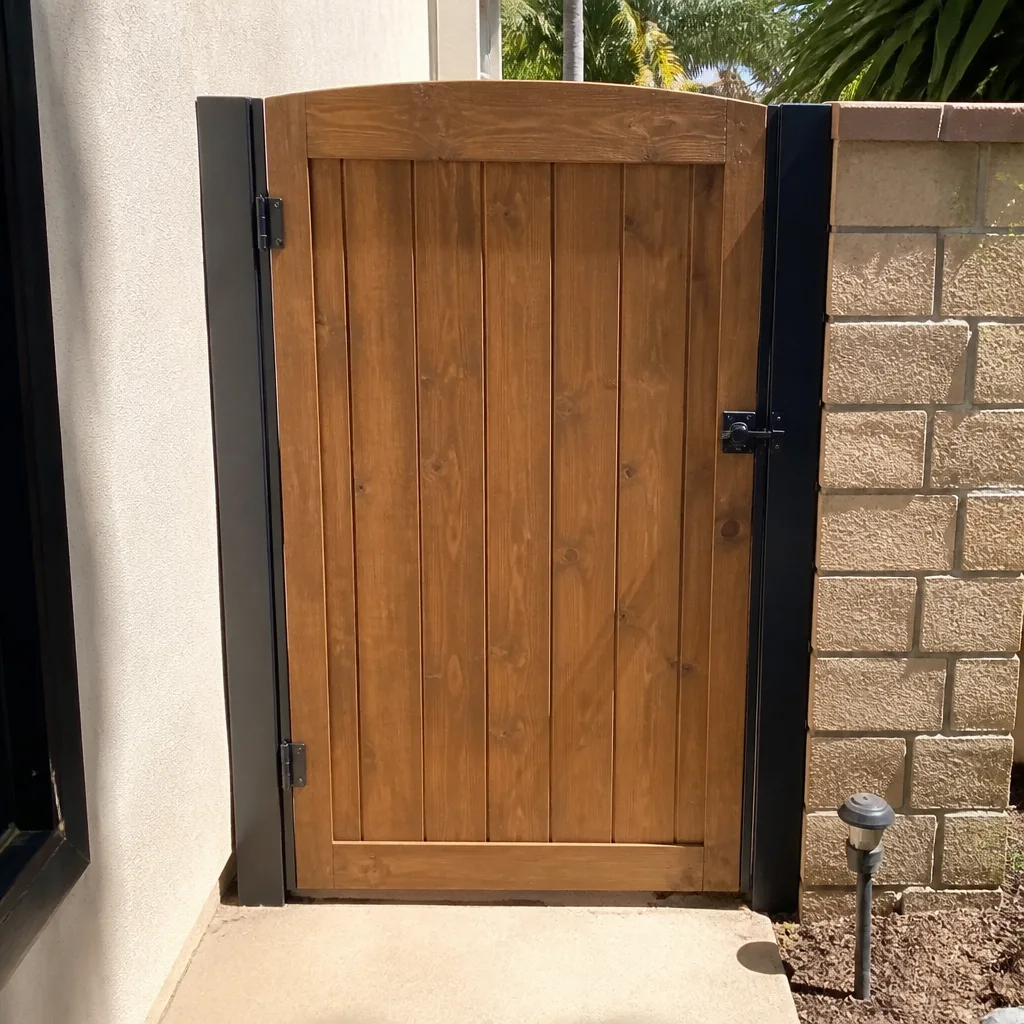
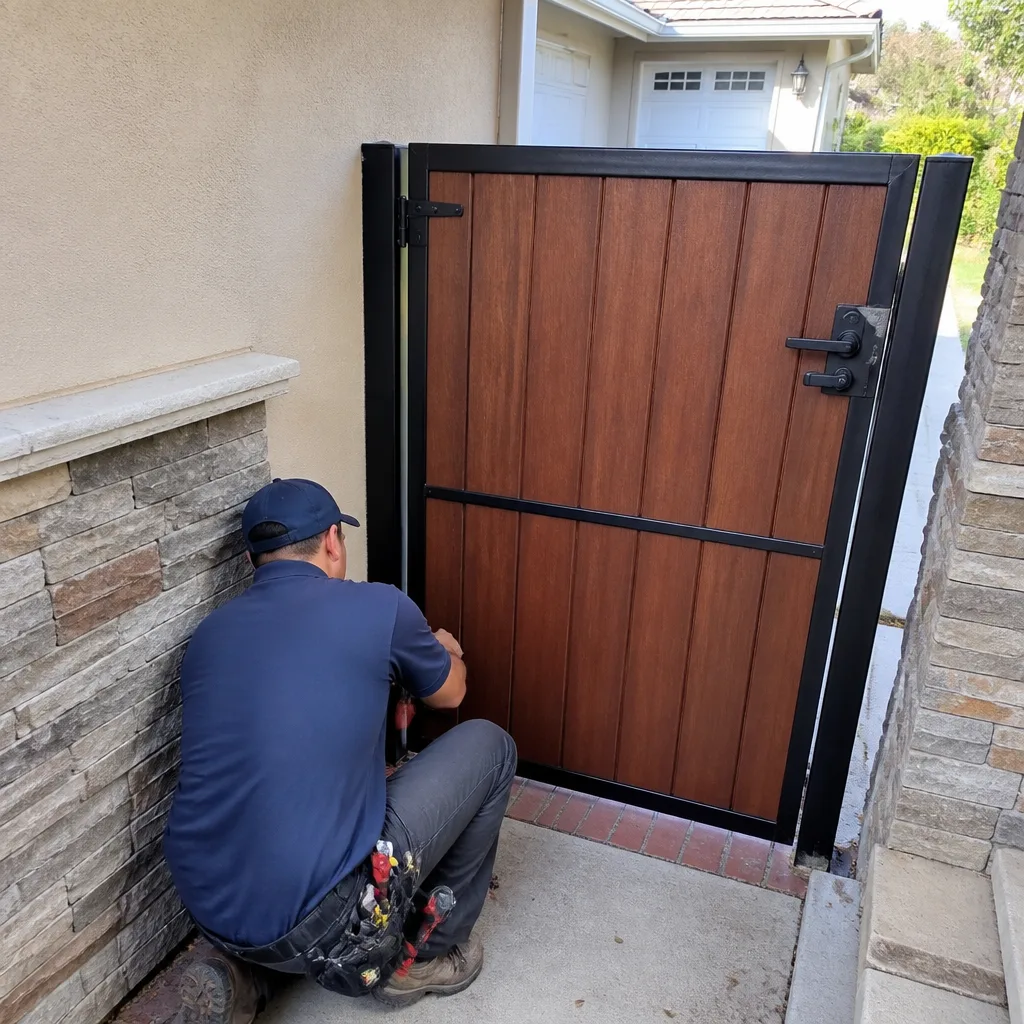
See the difference
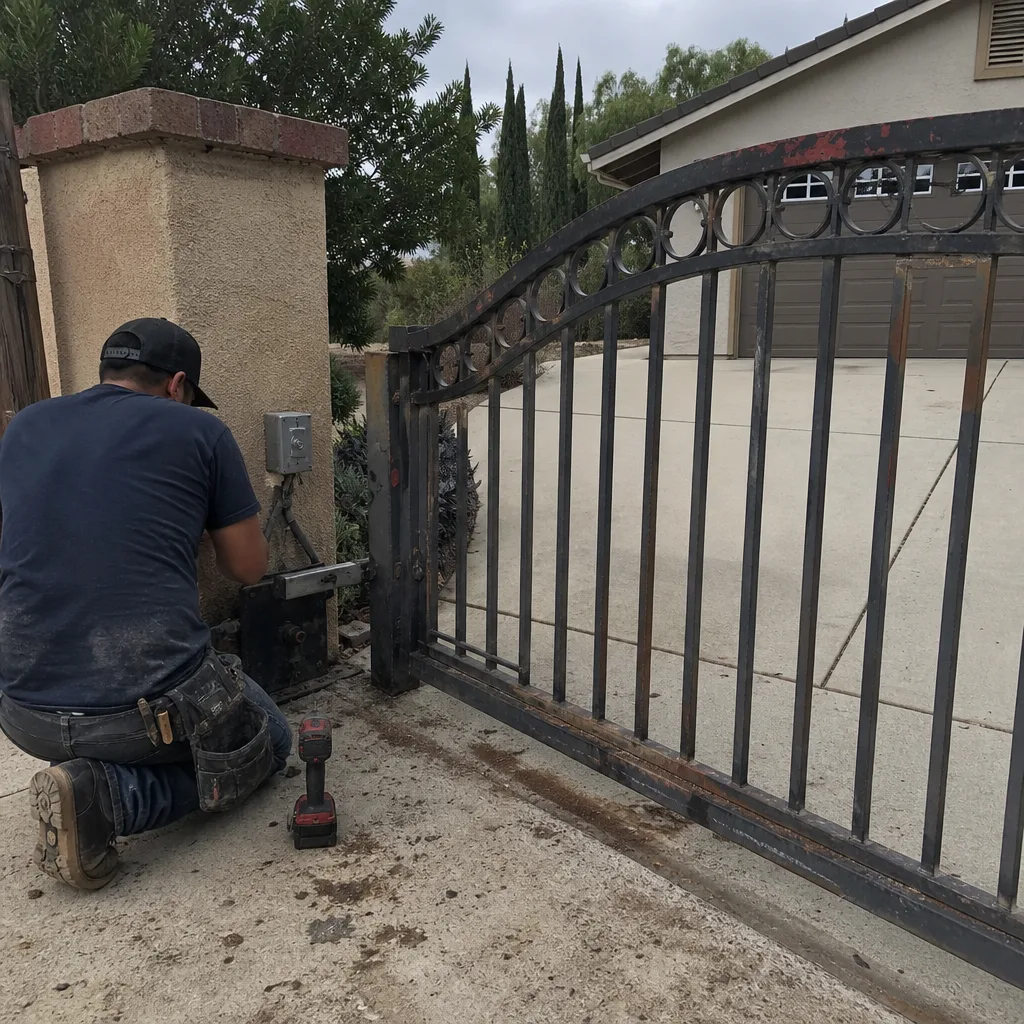 Before
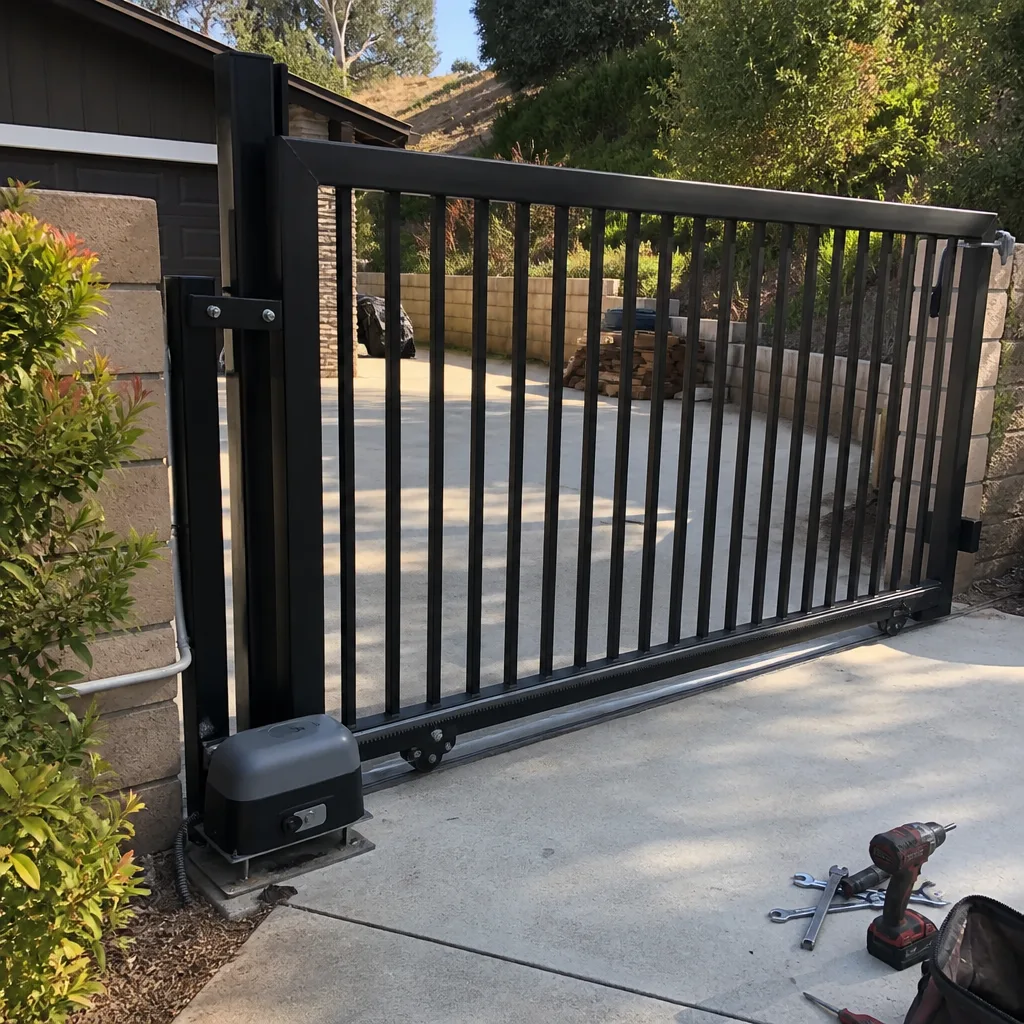 After
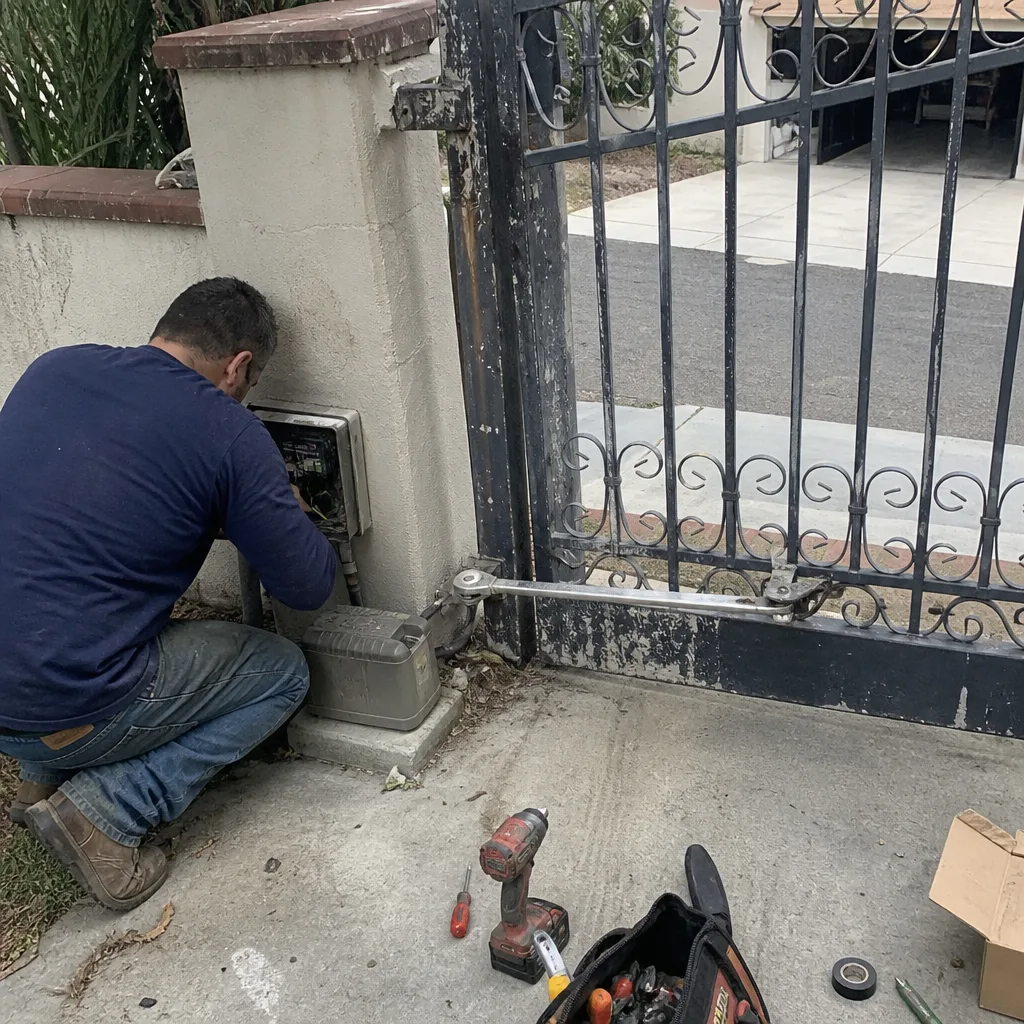 Before
 After
 Before
 After