
Last updated November 2, 2026
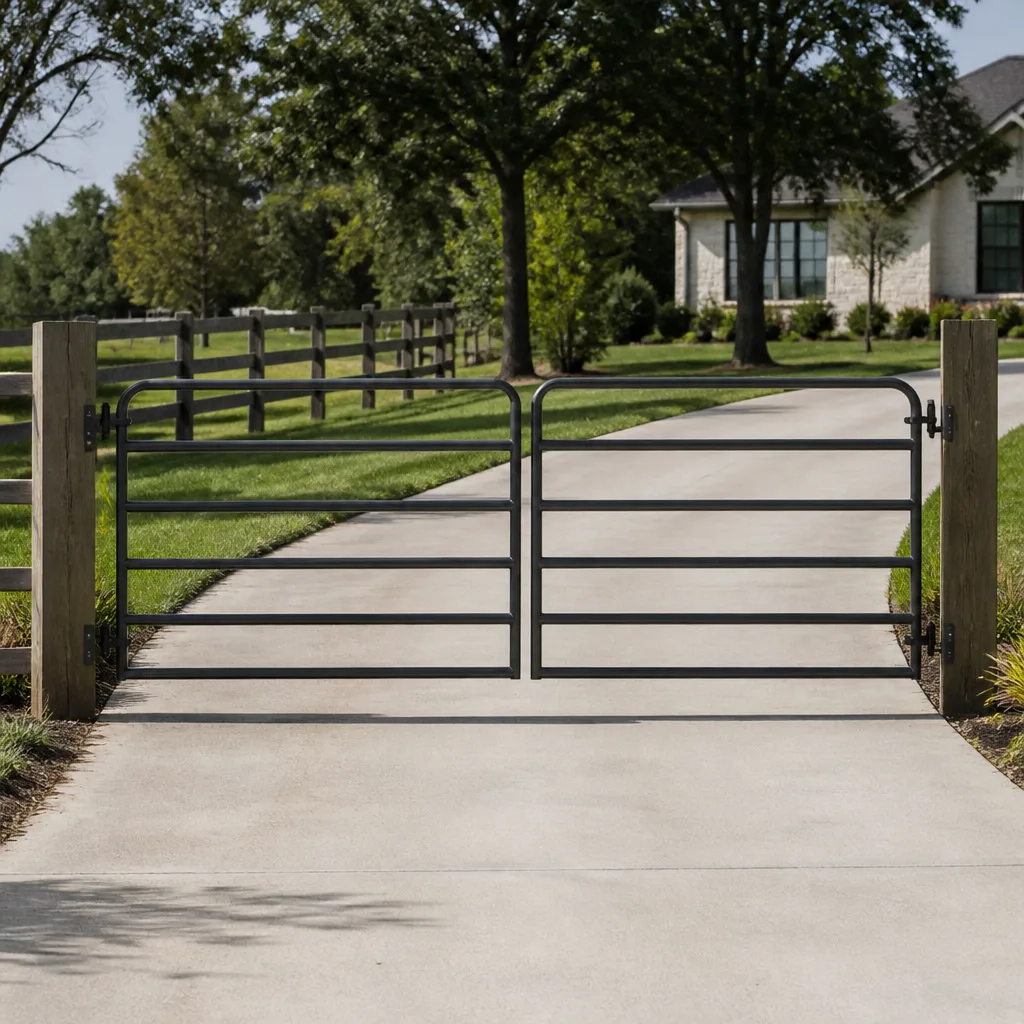 Farm & ranch
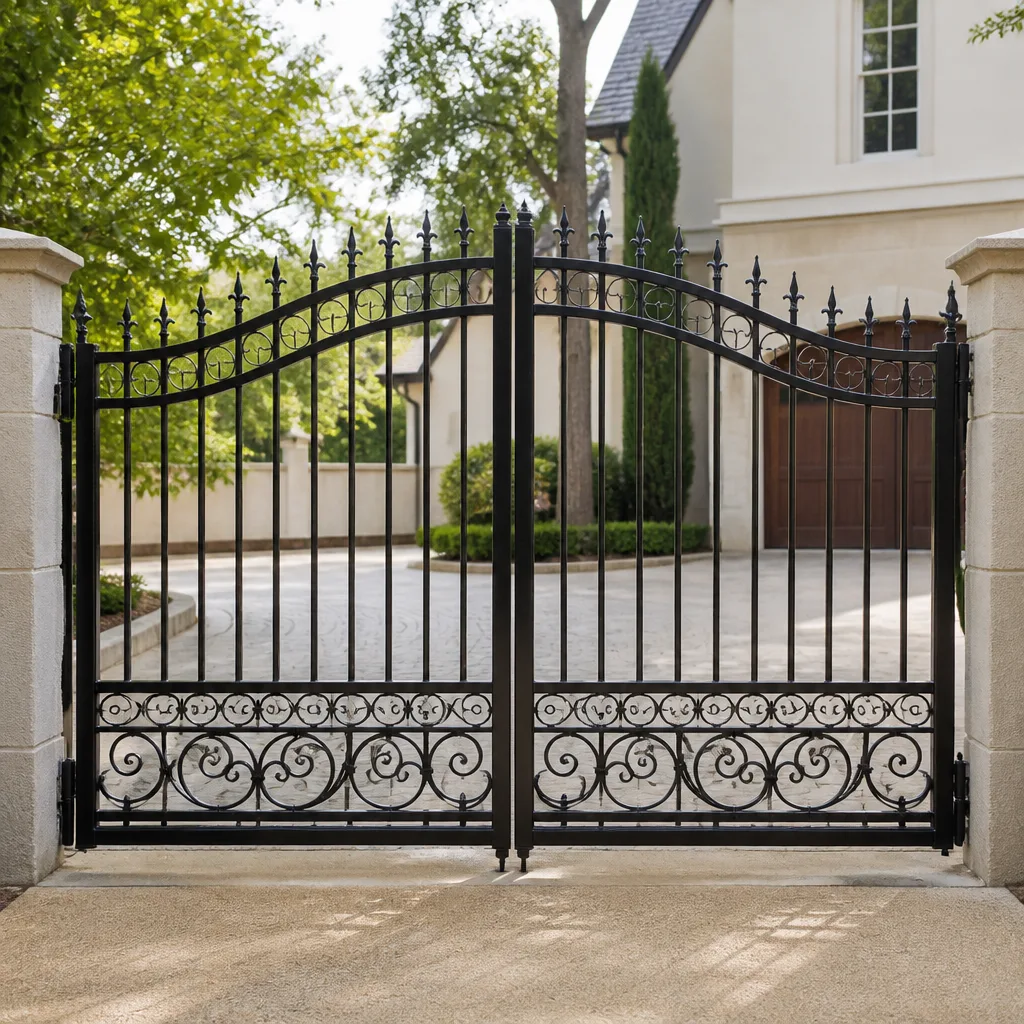 Wrought iron
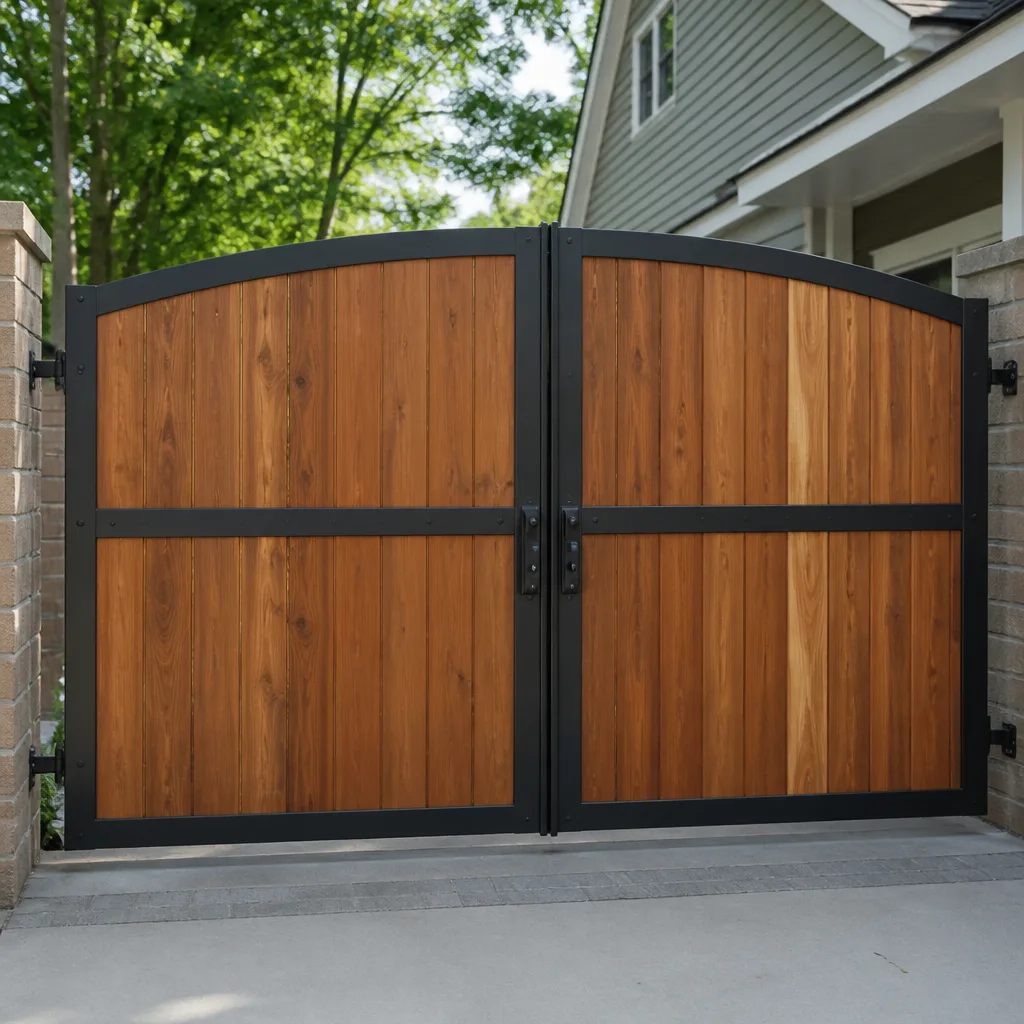 Wood & steel frame
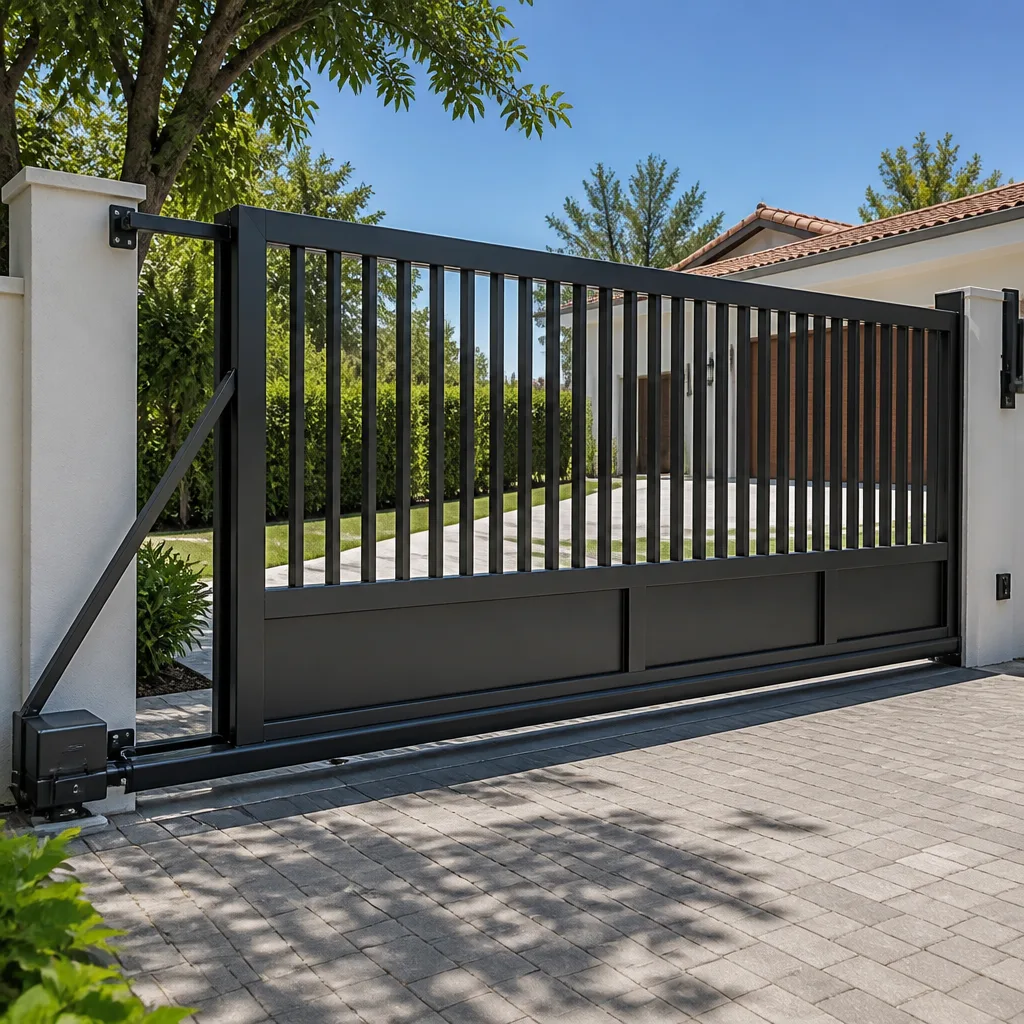 Sliding driveway gates
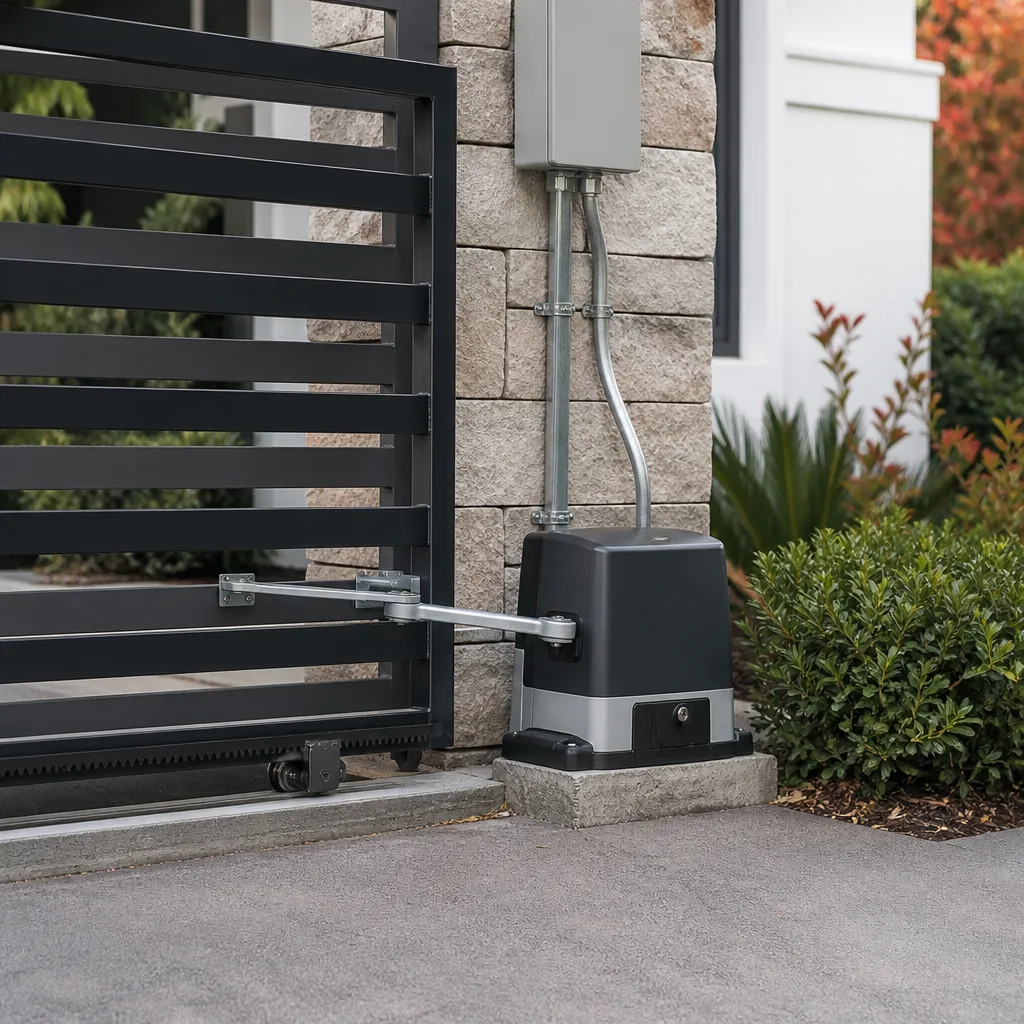 LiftMaster operators
Free on-site gate assessment - hinges, posts, and your LiftMaster or Nice gate operator checked before anything is quoted
The assessment is free and the quote is the invoice.
Get your free estimateGate Repair Warning Signs: A Rancho Bernardo Homeowner’s Reference Guide
A grinding noise on a slide gate during the last 18 inches of travel almost always means the drive gear is wearing unevenly – not that the track is dirty. Cleaning the track is the wrong fix, and it buys about three more weeks before the operator seizes. Most Rancho Bernardo homeowners we talk to have been watching their gate misbehave for months before they call, and by then a $200 gear replacement has become a $900 operator rebuild. This guide translates the ten most common gate behaviors into their actual mechanical causes, so you can act on evidence instead of anxiety. For professional help, explore our Gate Repair services.
Styles & brands we work with
- Wrought iron
- Wood & steel frame
- Farm & ranch
- Sliding driveway gates
- LiftMaster operators
Quick Answer
The most common gate repair warning signs in Rancho Bernardo are slow travel, grinding or scraping noises, unexpected reversing, intermittent remote failure, and gates that won’t stay closed. Each symptom points to a specific component – a torque limiter, drive gear, safety sensor, receiver board, or limit switch – and catching them early typically halves the repair cost. If your gate is making a new noise or moving differently than it did last month, it’s already telling you what’s wrong. For How to Hire a Gate Repair Contractor in Rancho Bernardo: A Step-by-Step Guide, see our detailed walkthrough.
Table of Contents
- The Symptom-to-Cause Table: What Your Gate Is Actually Telling You
- Sensor Fault, Board Fault, or Mechanical Fault: How to Tell Without Tools
- LiftMaster vs. Linear: Why One Tells You What’s Wrong and the Other Doesn’t
- Immediate Safety Risk vs. Schedule Within 30 Days
- Why a “Slow Gate” Is the Most Expensive Warning Sign You Can Ignore
- When Your Gate Reverses for No Reason: The Sensor You’re Not Checking
- Documentation for Property Managers: How to Log Gate Behavior So Technicians Diagnose Faster
- Rancho Bernardo-Specific Gate Failure Patterns
- Common Mistakes to Avoid
- When to Call a Professional
- Frequently Asked Questions
- The Bottom Line
The Symptom-to-Cause Table: What Your Gate Is Actually Telling You
A gate never just “breaks.” It degrades in a sequence, and each stage produces a specific, observable behavior. Here’s what we see on Rancho Bernardo properties – from the west side’s hillside homes near Lake Hodges to the gated communities off Pomerado Road – and what each behavior actually means mechanically. Read the table first, then dive into the sections below for the details.
- Gate moves slower than it did six months ago – Cause: torque limiter slipping, capacitor degrading, or gear wear. The operator is working harder than it should be, and the extra load is accelerating component failure.
- Grinding noise, especially in the last 18 inches of travel – Cause: drive gear wear on the rack. The gear teeth have worn into a different profile than the rack, so they bind as the gate approaches its stop position.
- Scraping or squealing during the entire travel – Cause: bearing failure in the gate wheel or roller assembly. The wheel isn’t rolling anymore; it’s dragging metal on metal.
- Gate starts to close, then reverses and stays open – Cause: obstruction sensor (photo eye or edge sensor) sending a false signal, OR the safety loop in the ground detecting a phantom vehicle. In Rancho Bernardo, false triggers from metal objects near the loop are common.
- Gate reverses, but only at night – Cause: photo eye misalignment that temperature change makes worse. Cooler night air contracts the mounting bracket just enough to break the beam alignment.
- Remote works sometimes, not others – from the same spot – Cause: receiver board capacitor aging, antenna corrosion, or interference from new nearby equipment. On Linear and DoorKing receivers, intermittent failure is often the first sign of capacitor fatigue.
- Gate stops mid-cycle and won’t move without a manual reset – Cause: thermal overload trip on the motor, triggered by excessive drag or a failing capacitor. This is the gate’s self-protection circuit engaging.
- Gate stays open or won’t close completely – Cause: limit switch failure. The operator no longer knows where “closed” is, so it either stops short or overshoots.
- Keypad works but remote doesn’t, or vice versa – Cause: receiver input failure or antenna lead break, not a universal system problem. Each input has its own circuit path.
- You hear the motor run, but the gate doesn’t move – Cause: stripped drive coupling or broken chain/belt. The motor spins, but the connection to the drive shaft is severed.
What surprises most homeowners is how reliably each symptom maps to its cause. In our experience working on electric gate repair in Rancho Bernardo, the gate’s behavior is rarely ambiguous once you know what to look for. That doesn’t mean you should grab a wrench – it means you should know when the gate is asking for help before it demands it.
Sensor Fault, Board Fault, or Mechanical Fault: How to Tell Without Tools
Every gate problem falls into one of three categories, and the category determines everything about the repair: cost, urgency, and whether you can wait a week. Here’s how to distinguish them using only what you can observe from your driveway – no multimeter, no panel removal, no exposed wiring. This matters because a homeowner who says “it makes a clicking sound but doesn’t move” gets a different diagnosis than one who says “it moves but reverses halfway” – and being able to describe the behavior precisely saves billable diagnostic time.
- Watch the gate’s physical response first. Does the gate move at all when you trigger it? If the gate moves but does something wrong (grinds, reverses, stops short), you have a mechanical fault in the gate itself or a sensor fault feeding bad information to the operator. If the gate doesn’t move at all but you hear a click or a hum, you have an operator fault – which narrows to motor, capacitor, or board.
- Listen for the motor during the failure. If you hear the motor running but the gate isn’t moving, the mechanical connection between motor and gate has failed – a stripped gear, broken chain, or disengaged clutch. This is a mechanical fault specifically in the drive train, not the gate structure.
- Test the keypad against the remote. If both fail, the problem is downstream of the inputs – in the control board or the motor. If one works and the other doesn’t, the problem is in the input path (keypad wiring, receiver board, antenna). A board replacement is $300-600 on most residential operators; a receiver antenna fix is often under $150. Knowing the difference before you call saves money.
- Look at what the safety sensors are doing at the moment of failure. On gates with photo eyes (the small sensors mounted on the gate posts), a red or blinking LED tells you the beam is interrupted or misaligned. If the gate reverses only when objects are near the posts, you have a sensor false-positive. If it reverses randomly regardless of what’s around, you have either loop detector interference or a board-level fault.
Most Rancho Bernardo homeowners can get to the right category in under two minutes using just these observations. That’s not DIY repair – it’s diagnostic literacy, and it’s the difference between a five-minute phone call and a service visit that starts from zero. When you call a gate repair specialist in Rancho Bernardo, you should be able to say “the motor runs but the gate doesn’t move” or “it reverses only at night” – and we can start the mental diagnosis before we even roll a truck.
LiftMaster vs. Linear: Why One Tells You What’s Wrong and the Other Doesn’t
Not all gate operators communicate equally. If you have a LiftMaster, the operator has an LED diagnostic light that blinks in specific patterns to tell you exactly what’s wrong – open, you can read the code and know whether it’s a sensor issue, a force setting trip, or a board fault. If you have an older Linear unit or an Apollo, the failure is often silent: the gate just stops working, and there’s no error code to read. This difference shapes how quickly a technician can diagnose the problem, and it’s one of the reasons brand-specific experience matters.
LiftMaster operators track two things that older Linear and Apollo units don’t: force profiles and sensor state history. When a LiftMaster stops and blinks a code, it’s telling you which safety circuit tripped. That code might say “photo eye obstruction” or “force exceeded” – and that tells us whether we’re looking at a misaligned sensor or a mechanical bind. Reset the operator, and the code clears, but the underlying condition doesn’t change. The gate will trip again, often within days.
Older Linear systems, by contrast, fail without a trace. The gate stops mid-travel, or the remote stops working, and there’s no diagnostic to read. Technicians who don’t work on Linear regularly tend to guess – replacing the receiver when the problem is a capacitor, or replacing the board when the problem is a thermal overload. We’ve seen Rancho Bernardo homeowners pay for two or three wrong part replacements on a Linear unit before someone actually traced the circuit. With Gate Repair Rancho Bernardo, the diagnostic starts with the brand – because we know which units have self-diagnostics and which don’t, and we know the failure patterns of each. DoorKing and Viking units fall somewhere in between: DoorKing operators on apartment and HOA gates often have a display readout, but residential Viking units frequently don’t. Ghost Controls systems, designed for retrofits, are generally strong on diagnostics but can mask mechanical faults if the duty cycle is exceeded.
The takeaway for a homeowner: if your LiftMaster is blinking a code, write it down before you reset the operator. That code is a timestamped confession of exactly which circuit tripped, and it can cut diagnostic time by twenty minutes. If your Linear or older Apollo unit just quits, don’t guess – the first step is to establish whether the failure is in the power supply, the receiver, or the safety circuit, and that’s usually a ten-minute check with the right equipment and the right experience.
Immediate Safety Risk vs. Schedule Within 30 Days
Not every warning sign is an emergency. Some are, and knowing the difference matters – both because you shouldn’t panic about a slow gate when it can wait a week, and because you shouldn’t ignore a gate that’s become a hazard to your family, your vehicles, or delivery drivers. Here’s the split we use when advising Rancho Bernardo homeowners.
Immediate safety risks – act same day or next day:
- Gate reverses after hitting an obstruction instead of stopping. The obstruction detection has failed. A gate that keeps pushing after it meets resistance can damage a car – or injure a child or pet.
- Gate drops quickly or slams shut. A broken spring or counterweight means gravity is now in charge. The gate can close with enough force to cause serious injury.
- You smell burned electrical odor from the operator box. This means a motor or capacitor is overheating. Unplug the operator at the breaker and leave it off until a technician arrives.
- Gate moves on its own, without any command. The board is receiving phantom signals or the motor circuit is shorting. Either way, the gate is unpredictable – the most dangerous possible condition.
Schedule within 30 days – not urgent, but not ignore-able:
- Slower-than-normal operation. The gate still works, but the torque limiter or gear is degrading. Catch it now and you’re looking at a $150-250 fix. Wait until the gate stops mid-cycle and you’ll likely need a $500-900 operator repair.
- Intermittent remote operation. Usually a capacitor or receiver antenna. Annoying but not dangerous. It will get worse, so schedule a fix before you’re locked out.
- Light grinding or scraping. Early wear. The longer it runs like this, the more damage it does to the gear and rack.
- Gate stops 2-3 inches short of full close. Limit switch is drifting. This is a $120-200 adjustment now, and a larger repair later if the misalignment damages the rack.
When in doubt about whether your gate is a safety hazard, err on the side of caution. A gate that slams, self-activates, or keeps pushing after contact is a liability on your property. Call and describe exactly what it’s doing. A good technician will tell you honestly whether it can wait – that’s part of the job.
Why a “Slow Gate” Is the Most Expensive Warning Sign You Can Ignore
Here’s the counterintuitive part: the slow gate is the warning sign homeowners most often shrug off, and it’s the one that most reliably predicts a major repair bill. A gate that “works fine but just takes longer” isn’t a nuisance – it’s a torque failure in progress. The operator is working against increasing resistance, and that resistance is wearing the motor, the gears, and the capacitor simultaneously. By the time the gate stops mid-cycle, you’re not fixing one component – you’re rebuilding the drive train.
In Rancho Bernardo, we frequently see slow gate operation on hillside properties, where the gate has to work harder against gravity, and on older installations where the original operator was sized for a lighter gate than what’s actually hanging on the hinges. Here’s what “slow” actually means mechanically, in the order of most likely to least likely:
- Torque limiter slip. Your operator has a clutch-like mechanism designed to slip if the gate encounters too much resistance, protecting the motor. When it starts slipping too early, the gate moves slowly because the drive force is being bled off. Adjusting torque is a 20-minute fix on most units – but if the underlying resistance (bad bearings, misaligned track, rusted roller) isn’t corrected, the slip returns.
- Capacitor degradation. The capacitor provides the starting torque that gets the motor moving. As capacitors age – and they all age, faster in heat – the motor starts weaker and runs weaker. On LiftMaster and DoorKing units, a weak capacitor is usually the cause of a gate that’s sluggish for the first few feet of travel, then runs more normally. It’s a $40-120 part; ignoring it eventually burns out the motor it’s supposed to be starting.
- Gear wear. On slide gates, the drive gear runs along a rack attached to the gate. As the gear wears, its teeth no longer mesh cleanly with the rack, and every rotation transmits less power. This is the one where the “last 18 inches” grinding sound shows up – the terminal section of travel is where the worn gear teeth bind hardest against the rack.
- Undersized operator. Sometimes the original installer saved money with an operator that was never really powerful enough for the gate’s weight and wind load. Rancho Bernardo’s desert-adjacent climate means hotter summers, and heat reduces operator duty cycle and motor efficiency. If your gate has always been a bit slow in summer, the motor may simply be undersized. Ghost Controls and Mighty Mule operators, popular for light residential gates, are particularly prone to this when asked to run anything heavier than a standard driveway gate.
The financial stakes are simple. A torque limiter adjustment is under $100. A capacitor replacement is $40-120. A full drive train rebuild – gear, motor, capacitor, and often limit switches – starts around $500 and climbs quickly. The slow gate is the gate equivalent of a “check engine” light: ignoring it doesn’t make the underlying problem go away, it just makes the eventual repair more comprehensive.
When Your Gate Reverses for No Reason: The Sensor You’re Not Checking
A gate that starts to close, then reverses and stays open, is one of the most common service calls we get in Rancho Bernardo – and it’s one of the most frequently misdiagnosed. The homeowner typically assumes the remote is the problem or the operator is “going bad.” In reality, the reversing gate is almost always a safety sensor problem or a loop detector problem, both of which are affordable to fix if you actually identify the source.
Here’s the key insight that most homeowners miss: your gate has two separate safety systems, and they fail differently. The first is the photo eye or edge sensor – the optical or pressure sensor that detects an obstruction in the gate’s path and reverses the gate before it hits anything. The second is the loop detector buried under the driveway, which detects a vehicle sitting on the loop and prevents the gate from closing on it. When either of these sends a false trigger, the gate reverses – not because it’s broken, but because it’s doing exactly what it was designed to do with bad information.
Photo eye problems account for about 65% of false reversals. The photo eye is mounted on the gate posts, and it works by maintaining an invisible beam between two sensors. If the beam is interrupted – by a misaligned bracket, a drifting post, a plant that’s grown into the beam path, or even a spider web built across the lens – the gate thinks there’s an obstruction and refuses to close. In Rancho Bernardo, where summer heat and winter rain cause metal brackets to expand and contract, photo eye alignment drifts over time. The telltale sign is a gate that reverses consistently at the same point in its travel, or reverses only at certain times of day.
Loop detector problems are the one most homeowners never know about, because the loop is invisible – it’s a wire coil buried under the driveway. When a vehicle drives onto the loop, it changes the coil’s electrical properties, and the detector board signals the operator to hold the gate open. Problems arise when the loop detects metal that isn’t there – a nearby manhole cover, a buried pipe, a neighbor’s vehicle parked close to the property line, or even a piece of rebar in a newer driveway. The gate reverses because the loop is telling the operator “there’s a vehicle here, don’t close.” This is especially common on Rancho Bernardo properties with concrete driveways that have been repaved without adjusting the loop wire depth.
The diagnostic difference matters because the fixes are completely different. A misaligned photo eye is usually a 15-minute adjustment. A false-triggering loop requires recalibrating the loop detector or, in some cases, rewiring the loop. If you call a technician and say “my gate reverses,” you’ll get a service visit. If you can say “it reverses when I approach from the street side but not from the house side” or “it reverses every time, even with nothing near the gate,” you’ve already eliminated half the diagnostic work.
Documentation for Property Managers: How to Log Gate Behavior So Technicians Diagnose Faster
If you manage a Rancho Bernardo HOA, apartment complex, or commercial property with an access-controlled gate, you’re not just responsible for fixing the gate – you’re responsible for being able to show a board or an owner why the repair cost what it did and why repeated service calls were necessary. The property managers who document gate behavior systematically get better service, lower diagnostic costs, and fewer disputes about repair bills. Here’s how to do it without turning yourself into a part-time gate technician.
- Create a simple log – and actually use it. A shared spreadsheet or a notes app entry for each gate is enough. Columns: date, time, what the gate did, what the weather was, and what happened on the keypad/remote. The goal isn’t technical analysis – it’s pattern capture. “Gate was slow Monday morning, fine by afternoon” three weeks in a row is information a technician can use. No log entry at all is just another mystery call.
- Take a 15-second video from the exact same spot every time. Phone video of a gate failing is more diagnostically valuable than most people realize. The sound of a gear grind, the speed of the gate, the point where it reverses – these are observable from video without any technical knowledge. A 15-second clip emailed to a gate company before the service visit can cut the diagnostic time in half, which means a shorter bill.
- Note which input was used when the gate failed. Was it the keypad at the street? The remote from the car? The exit loop? The fire department key switch? Knowing which input triggered the failure (or failed to trigger) narrows the diagnostic path significantly. A gate that fails on the keypad but works on the remote has a completely different problem than a gate that fails on every input.
- Track the weather and time of day. This sounds excessive, but it’s one of the most powerful pattern-indicators. Gates that fail only in the afternoon heat are pointing to thermal issues. Gates that reverse only at night are usually photo eye alignment drift. Gates that fail only after rain have a water ingress problem in a junction box. Rancho Bernardo’s climate – hot dry summers, cool damp winters – produces all three patterns, and the weather column helps us separate them.
- When you call a technician, report the log, not just the current failure. Saying “the gate won’t close” starts the clock at zero. Saying “the gate has been slow for three weeks and now it stops mid-travel and reverses” gives us the diagnostic history we need to make the right call on the first visit. That’s how you avoid multiple service calls for the same underlying problem – and it’s how you keep the board off your back about the repair budget.
One more thing for property managers: gate installation in Rancho Bernardo with modern operators includes diagnostic logging built into the system. If you’re managing an older property and the board is already grumbling about repeated gate repair costs, documenting behavior now is the best leverage you have for making the case to upgrade when the time comes. A well-kept log turns an emotional argument (“this gate is always broken”) into a factual one (“the gate has failed 9 times in 12 months, each time on the same component”).
Rancho Bernardo-Specific Gate Failure Patterns
Every region has its own gate failure signature, and Rancho Bernardo’s is distinct. The climate is semi-arid with hot summers and mild, occasionally damp winters. Salt is rarely a factor, but heat, dust, and wind are. Here’s what that means for your gate specifically, based on what we see across the neighborhoods – from the custom homes near Bernardo Heights to the older properties along Espola Road and the HOA communities throughout the area. For maintenance tips, check our Seasonal Gate Repair Care for Rancho Bernardo: Year-Round Homeowner’s Guide.
Heat-related capacitor failure is our most common summer call. Gate operators generate heat when they run, and in Rancho Bernardo’s 90°F summer days, the inside of an operator box can reach 130°F or higher. Capacitors – the components that give the motor its starting jolt – degrade faster in sustained heat, and most operator boxes aren’t ventilated well enough to protect them. The signature symptom is a gate that’s sluggish in the afternoon but works fine in the morning.
Dust and grit accumulation on gate tracks and rollers is a year-round issue. Rancho Bernardo sits at the edge of the San Pasqual Valley, where light winds carry fine dust into gate mechanisms. That dust mixes with bearing grease to form an abrasive paste, accelerating roller and hinge wear. Slide gates are especially vulnerable, because the dust settles directly on the track and gets ground into the wheel bearings with every cycle. A gate that’s making a dry, gritty sound when it moves is usually running on contaminated lubrication – and adding grease without cleaning first just makes it worse.
Vine and plant encroachment is a quiet gate killer in Rancho Bernardo. Many properties have bougainvillea, ivy, or other climbing plants near the gate line. Those plants grow toward the gate mechanism – the photo eye, the limit switch, the operator arm – and interfere with sensors or physically block travel. The gate doesn’t fail suddenly; it starts working intermittently, misaligned by a plant stem across the photo eye or winding into the drive mechanism. Trim first, then call if the behavior persists.
Power surges during Santa Ana season. Rancho Bernardo experiences the same Santa Ana wind events as the rest of inland San Diego County, and those events bring power line stress and occasional surges. Gate control boards are sensitive to voltage spikes, and a surge can permanently damage a board or the receiver circuitry. If your gate dies and there’s a known power event in the same window, mention that when you call – it changes the diagnostic path, and it’s relevant information for your homeowner’s insurance.
Common Mistakes to Avoid
- Ignoring a slow gate. Slowness is the earliest and most costly warning sign. The gate is telling you the torque limiter, capacitor, or gear is degrading. Waiting until it stops means multiplying the bill by three or more.
- Cleaning or lubricating a grinding gate without addressing the cause. Grinding sounds are gear or bearing wear, not dirt. Adding grease temporarily reduces the noise but doesn’t correct the wear pattern – and the underlying damage continues while you feel like you’ve fixed something.
- Resetting a LiftMaster operator without writing down the error code first. The blinking diagnostic code is your best clue to what’s wrong. Clear it, and you’ve deleted the evidence. Write it down before touching anything.
- Buying a universal remote before checking the receiver. When a remote stops working consistently, the problem is often the receiver board, not the remote itself. A new remote won’t fix a failing receiver – save your money and get a diagnosis first.
- Adjusting the gate’s force settings to compensate for a mechanical problem. Crank up the force so the gate pushes through whatever’s binding, and you accelerate the damage to the motor and gears. A gate that needs more force is a gate with a mechanical problem, not a calibration problem.
- Waiting until the gate fails completely to call for service. By the time a gate stops, the component damage is usually complete. The repair is more expensive, takes longer, and often involves replacing parts that would have been fine if the underlying issue had been caught earlier.
- Assuming a gate problem is covered by a manufacturer’s warranty without checking what’s actually wrong. Manufacturer warranties cover defects in the operator, not damage from mechanical problems or environmental factors. A fried board from a power surge or a stripped gear from a seized wheel isn’t a warranty claim.
When to Call a Professional
If your gate is making a noise it didn’t make before, moving slower than it did last season, or behaving unpredictably, that’s the signal to call. Specifically, call if: the gate slams or drops quickly, reverses after hitting something, moves on its own, makes a grinding noise during travel, or has stopped responding to any input. These symptoms indicate safety hazards, major mechanical wear, or board-level failures – none of which will resolve themselves. Gate Repair Rancho Bernardo offers free estimates throughout Rancho Bernardo. Call (855) 532-9392 and describe exactly what the gate is doing. If it’s safe to wait, we’ll tell you. If it’s not, we’ll come out same day.
Frequently Asked Questions
Most gate repairs in Rancho Bernardo run between $150 and $900 depending on the component: sensor realignment typically costs $80-150, capacitor replacement $40-120, limit switch adjustment $120-200, gear replacement $200-400, and a full drive train rebuild $500-900. The exact price depends on the operator brand and the extent of the damage. Call (855) 532-9392 for an exact quote – estimates are free.
Yes, for common issues like sensor misalignment, capacitor replacement, and limit switch adjustment – those are typically same-day repairs. More complex failures, like a full motor replacement or a loop detector rewire, may take 24-48 hours if parts need to be ordered. Emergency safety issues – a gate that slams, self-activates, or won’t stop pushing – are prioritized for same-day dispatch.
A manual gate problem is in the physical structure: hinges, rollers, wheels, tracks, or the gate frame itself. An electric gate problem is in the operator system: motor, capacitor, control board, receiver, sensors, or limit switches. The two often interact – a mechanical problem causes the operator to work harder, which causes electrical failure – and most Rancho Bernardo automatic gates need both systems evaluated when symptoms appear. One call covers the gate and the operator.
This is nearly always heat-related, typically a capacitor that’s degrading. As the afternoon temperature rises, the capacitor’s starting capacity drops, and the motor can’t get enough power to move the gate. It’s a common pattern in Rancho Bernardo’s summer climate and usually means a $40-120 capacitor replacement is coming due.
If your gate slams shut, drops quickly, keeps pushing after it hits something, moves on its own, or makes a loud grinding sound while closing, treat it as a safety hazard and keep people and vehicles away from the gate until a professional can inspect it. A gate that’s merely slow or intermittently unresponsive is a maintenance issue, not an immediate safety risk.
Yes. We work on LiftMaster, FAAC, BFT, Linear, Viking, Ghost Controls, DoorKing, Elite, and Mighty Mule systems – including older units that some companies won’t touch because parts aren’t readily available from the manufacturer. We source parts or find compatible replacements where a direct replacement is no longer manufactured. If your system is an older Linear or Apollo, we know it.
Your gate is a mechanical system that talks to you. Every noise, every hesitation, every reversal is a diagnostic signal, not a random glitch. The gate that closes a little slower than it used to is telling you something about its torque limiter or capacitor. The gate that grinds on the last stretch of travel is telling you about gear wear. The gate that reverses with no obstruction is telling you about a sensor or loop problem. Listen, document what you observe, and call a gate repair specialist in Rancho Bernardo while the problem is still cheap to fix. Waiting doesn’t save money – it just converts a part replacement into a system rebuild.
Written by the team at Gate Repair Rancho Bernardo, serving Rancho Bernardo since 2013. Browse our more guides & resources for additional homeowner tips.
See the difference
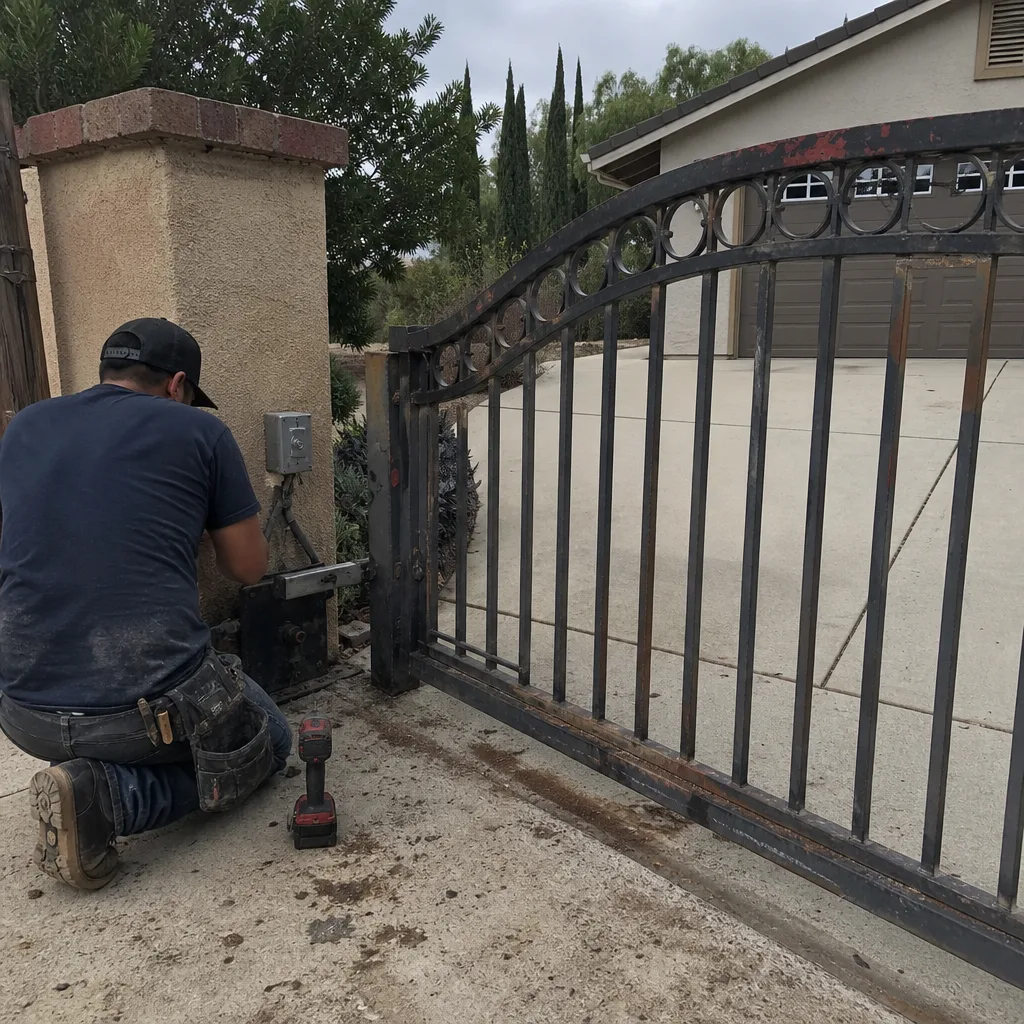 Before
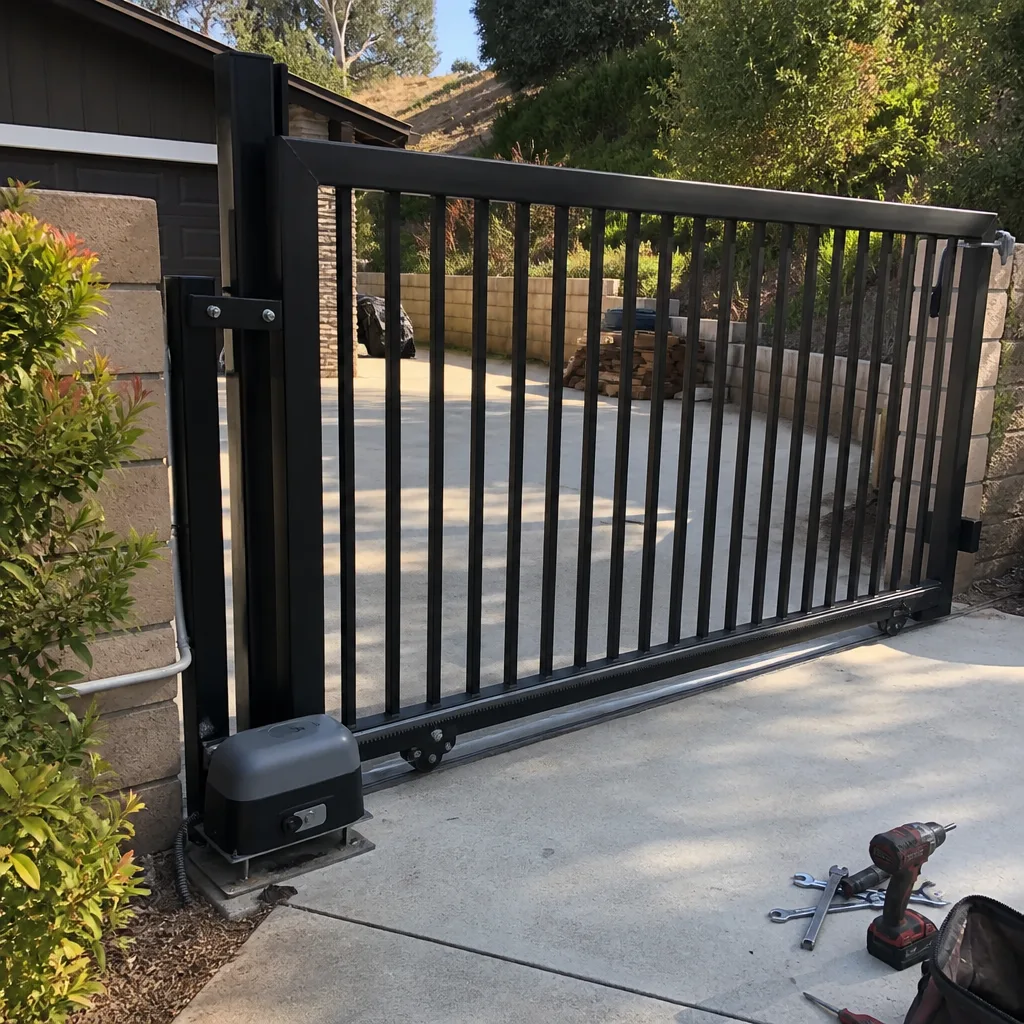 After
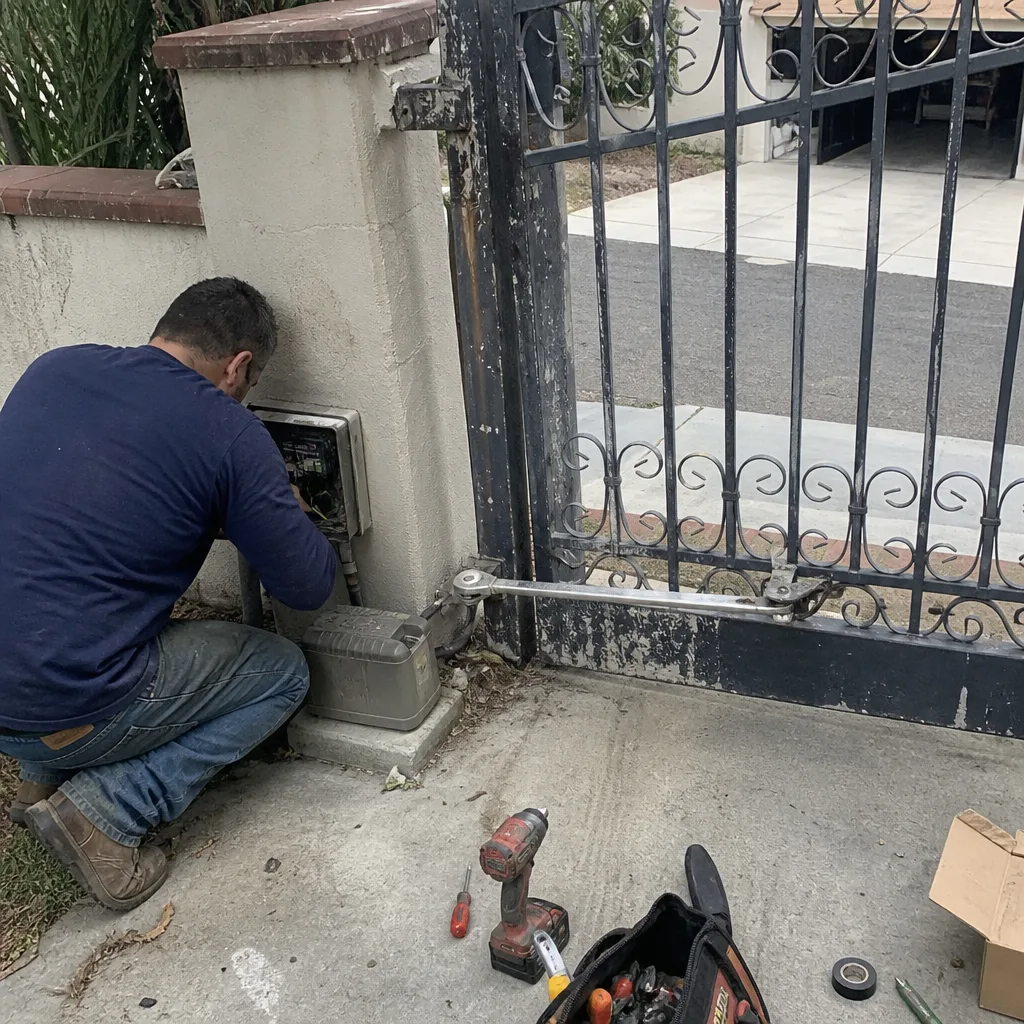 Before
 After
 Before
 After