
Last updated November 2, 2026
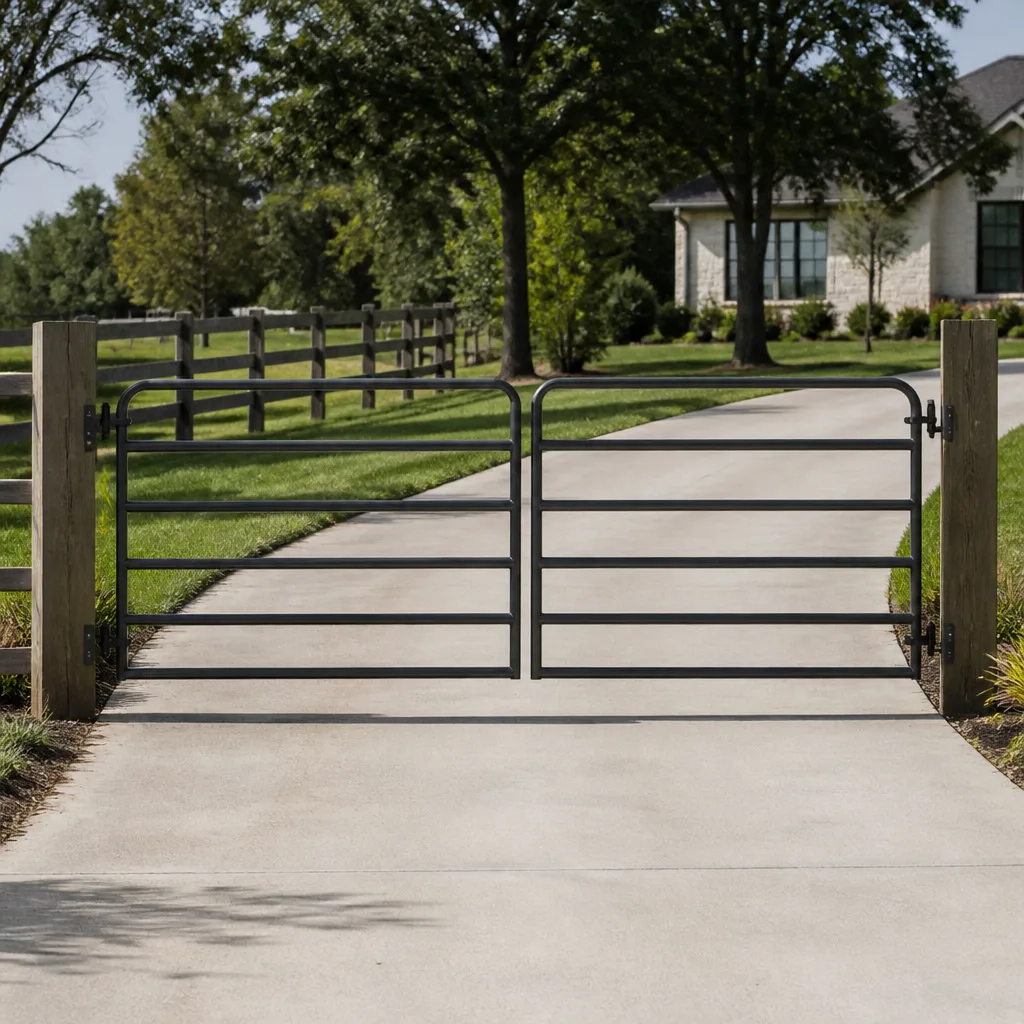 Farm & ranch
 Wrought iron
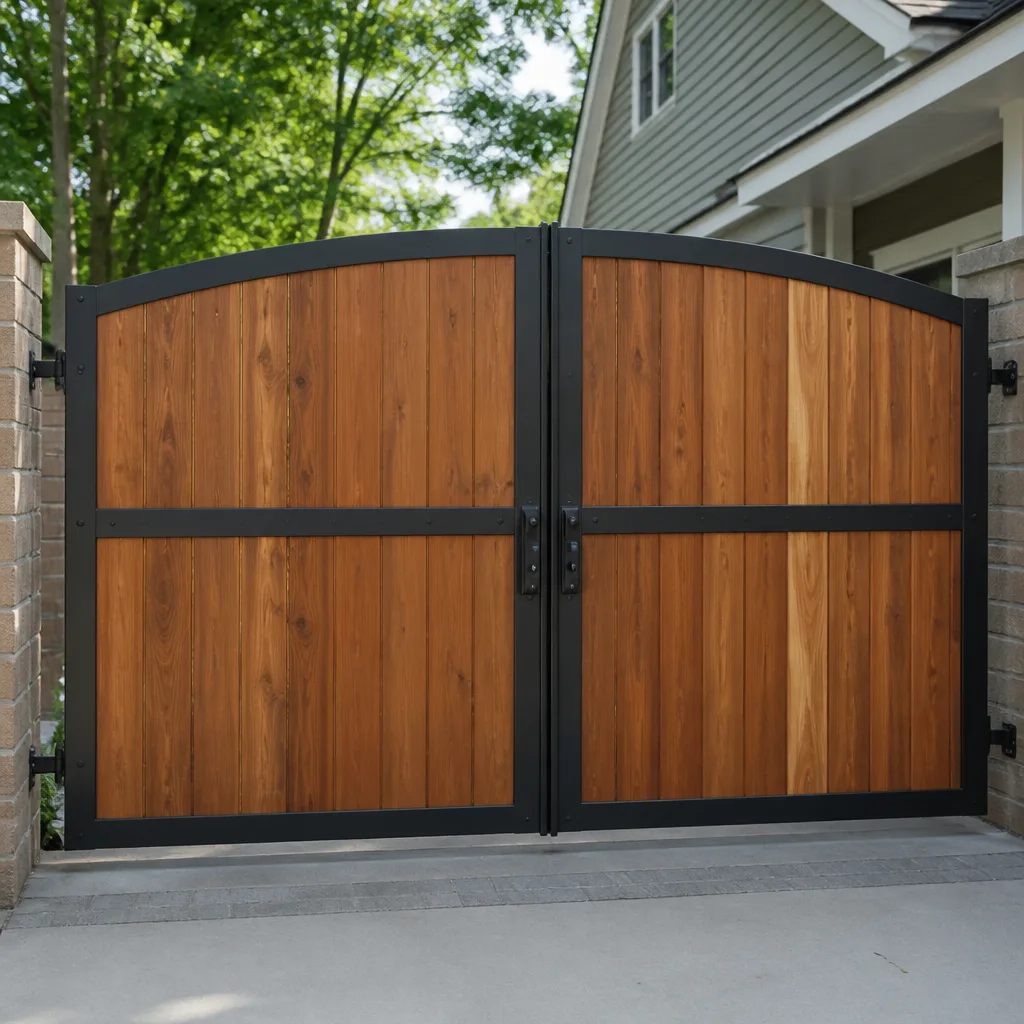 Wood & steel frame
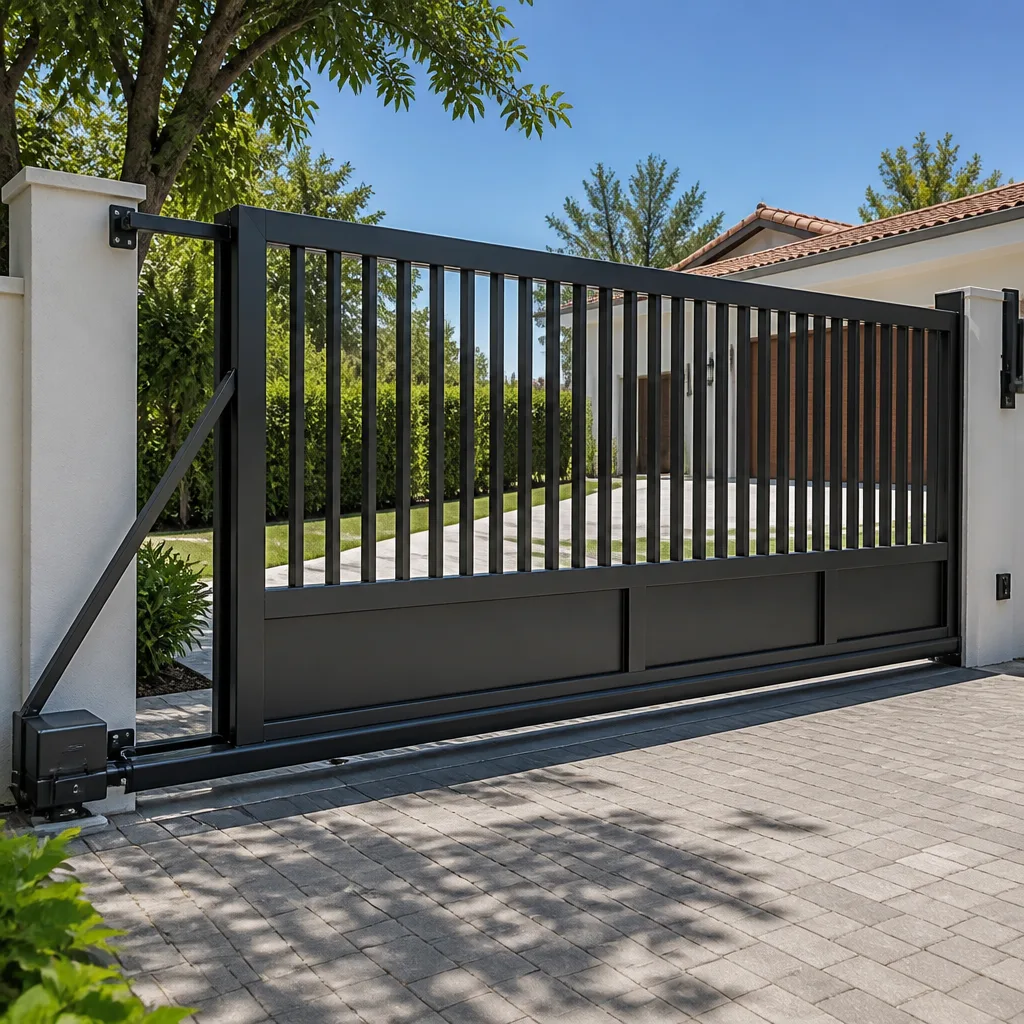 Sliding driveway gates
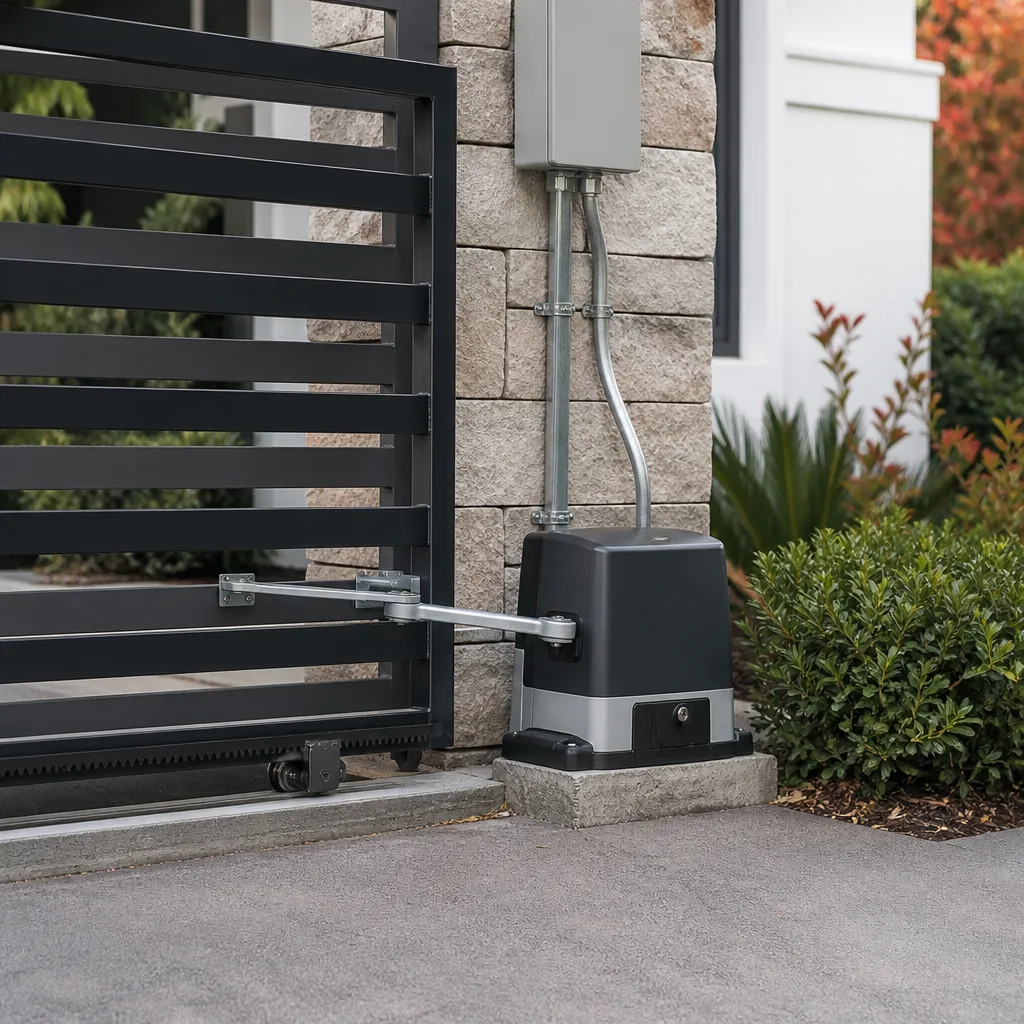 LiftMaster operators
Free on-site gate assessment - hinges, posts, and your LiftMaster or Nice gate operator checked before anything is quoted
The assessment is free and the quote is the invoice.
Get your free estimateSeasonal Gate Repair Care for Rancho Bernardo: Year-Round Homeowner’s Guide
October and November are when we get the most urgent calls from Rancho Bernardo homeowners. Not July. Not August. The Santa Ana winds that sweep through the valley each fall are the single biggest seasonal killer of automatic gate systems in this area. Dry air strips lubrication from chains and bearings, wind-driven debris piles into slide tracks and blocks photo-eye sensors, and static-charged dust coats circuit boards inside operator housings. This guide, along with our The Complete Gate Repair Guide for Rancho Bernardo Homeowners, maps the actual seasonal stress pattern Rancho Bernardo’s climate puts on gate equipment, month by month, so you can schedule maintenance before problems force an emergency call.
Quick Answer
Seasonal gate care in Rancho Bernardo means preparing slide tracks and photo-eye sensors for Santa Ana winds in fall, addressing heat-related thermal cutout on operators during summer, sealing ground-level corrosion points and checking battery backups before the winter wet season, and timing your annual professional inspection for mid-September through early October when pre-wind-season diagnostics catch the most failures before they happen.
Styles & brands we work with
- Wrought iron
- Wood & steel frame
- Farm & ranch
- Sliding driveway gates
- LiftMaster operators
Table of Contents
- Santa Ana Wind Preparation: October-November
- Winter Wet-Season Prep: December-February
- Spring Transition Checks: March-April
- Summer Heat Management: May-September
- The Month-by-Month Task Calendar
- Brand-Specific Seasonal Considerations
- Common Mistakes to Avoid
- When to Call a Professional
- Frequently Asked Questions
Santa Ana Wind Preparation: October-November
Santa Ana season in Rancho Bernardo runs from October through November, occasionally stretching into December. The conditions are specific: sustained dry air with single-digit humidity, wind gusts that routinely hit 30-50 mph through the valley corridors, and airborne dust and leaf debris. For a gate operator, this combination attacks in three ways simultaneously.
First, the dry air pulls moisture from every moving component. We’ve opened LiftMaster operators in late November that have chains so dry they look sandblasted. Grease on slide gate rollers turns to crumbly paste. Hinges on swing gates develop a squeal that warns of metal-on-metal contact. If you hear that squeal in October or November, the lubrication has already failed, and the part is wearing at an accelerated rate.
Second, wind-driven debris is the enemy of slide gate tracks. Eucalyptus leaves, palm fronds, and loose landscape material from Rancho Bernardo’s heavily landscaped properties end up in the V-track groove. A leaf packed into the track acts like a brake pad, forcing the operator motor to work harder. Over a few weeks of this, the motor thermal cutout activates more frequently, and shaft bearings take premature wear.
Third, debris hitting photo-eye sensors is the number one reason gates stop mid-cycle and reverse unexpectedly during Santa Ana season. The sensors, mounted low on either side of the gate opening, get covered in dust film even when nothing visible blocks them. The dust diffuses the infrared beam enough to trigger the safety reversal.
Here is a pre-Santa Ana preparation sequence we recommend for Rancho Bernardo gates:
- Clean the full length of the slide track groove with a stiff brush and compressed air. Pay attention to the last three feet where debris compacts.
- Wipe photo-eye lenses with a dry microfiber cloth on both sides. Test with a block test: place an object in the beam path while the gate closes; it should stop and reverse immediately.
- Lubricate chains, hinges, and rollers with a dry-film silicone lubricant. Avoid grease-based products in fall; they attract more dust.
- Check the loop detector sensitivity. Wind-blown metallic debris near the loop can cause false trigger signals. A technician can adjust sensitivity with a trim pot on the detector board.
- Inspect the operator housing for dust ingress. Cabinet seals crack with age. Even a small gap lets Santa Ana dust coat the circuit board, and static discharge from dry air can damage electronics.
One final point for this season: if your swing gate uses a Mighty Mule or Ghost Controls opener with a threaded drive arm, check that the drive nut has grease. Wind loading on the gate leaf puts lateral stress on the drive screw, and a dry nut wears unevenly under those loads.
Winter Wet-Season Prep: December-February
Rancho Bernardo’s wet season is short but concentrated. The area averages roughly 10-12 inches of rain annually, and most of it falls between December and March. For a gate system, the threat is not the rain itself. It’s what the rain does to components that have already been stressed by a dry fall.
Corrosion is the top winter failure mode we see. The specific points that corrode first on Rancho Bernardo gate systems:
- Ground-mounted operator housings: The bottom seal is the weak point. Standing water from irrigation runoff or pooled rain wicks up through gaps at the base plate. Rust forms on the transformer bracket and capacitor mounts inside.
- Slide gate V-track hardware: The hold-down bolts that secure the track to the concrete pad are typically zinc-plated. Once the zinc is compromised, the bolts rust through and the track shifts, binding the gate wheels.
- Battery backup terminals: On systems with DC operators (many LiftMaster, FAAC, and BFT models), the battery terminals are prone to corrosion buildup. White or green crust on terminals indicates creeping resistance that will eventually starve the board of power during an outage.
- Solar panel connections: For gates without a nearby power source, the panel-to-controller wiring is a frequent corrosion point, especially at the MC4 connector junction below the panel.
Before the first heavy rain, we recommend this sequence:
- Seal the operator housing bottom edge with a weatherproof silicone bead. This stops water wicking at the base plate seam.
- Clean battery terminals with a wire brush and apply dielectric grease. Test the battery by cutting power and running a full open-close cycle.
- Check drainage around the gate foundation. If water pools near the track or the operator pad, regrade the area or add channel drainage so water flows away.
- Verify the operator heater (if equipped) activates when temperatures drop below 40 degrees. Most commercial DoorKing and Elite operators have optional heater elements.
- Test the manual release mechanism. During a power outage, you need to be able to disengage the operator and move the gate by hand. A corroded release mechanism locks up when you need it most.
The wet season is also when we see the most gate strike plate misalignments. Wooden gate frames, even sealed ones, absorb moisture during winter and expand. A gate that latched perfectly in October may sit 1/4 inch out of alignment by January. The operator compensates by over-driving the close cycle, which wears the drive components. Have the alignment checked once in December and once in February if your gate is wood-framed.
Spring Transition Checks: March-April
March and April in Rancho Bernardo are transition months. The rain tapers off, temperatures climb, and gate systems that survived winter face a subtle challenge: dried debris from winter storms, now baked into place by spring sun. This is the season for thorough cleaning and inspection, not emergency repair.
Spring is also when many Rancho Bernardo homeowners discover that winter moisture did more damage than they realized. Rust that started in February finishes its work in March. A chain that rusted during the wet season and then ran dry in spring heat can snap in April.
Key spring checks:
- Inspect chains and belts for rust blooms at every link. Surface rust can be treated; deep pitting means replacement.
- Verify the gate wheels roll freely with no flat spots. Flat spots develop when a gate sits in one position with weight resting on the same wheels through the wet season.
- Re-torque all mounting bolts on the operator, track, hinges, and cantilever rollers. Seasonal expansion and contraction loosens hardware over winter, especially on gates mounted to concrete slabs that shift slightly with moisture changes.
- Test the loop detector functionality under both wet and dry soil conditions. A loop that was tuned during dry fall conditions may behave differently in saturated spring soil, causing phantom triggers or missed vehicle detection.
- Run the gate through five full open-close cycles and listen. Clicking, grinding, or hesitation at any point in the cycle is a diagnostic clue the system is about to fail, and identifying it in April beats fixing it during the summer heat.
April is also the time to schedule your annual professional inspection if you missed the September window. The weather is mild enough that any repairs are comfortable for the technician, and you’ll have the system baseline documented before the real heat sets in.
Summer Heat Management: May-September
Rancho Bernardo summers are inland warm, not coastal mild. Daytime highs routinely reach 90°F, with stretches above 95°F in June through August. The gate operator sitting in direct sun on a concrete pad can reach internal temperatures of 130°F or more. This is thermal stress territory.
The most common summer failure is thermal cutout. Every modern operator has a thermal protection circuit that shuts the motor down when internal temperatures exceed safe operating limits. The symptom is predictable: the gate works fine in the morning, stops responding mid-afternoon, and works again after the sun goes behind the house. Homeowners often assume the remote or the circuit board is failing, but the real cause is heat accumulation inside the operator housing.
Summer heat affects gate components in specific ways:
- Wiring insulation: PVC insulation becomes brittle after repeated summer heat cycles. We’ve seen wiring inside conduits where the insulation crumbles off when touched, exposing copper to potential shorts. This is most common on installations that use low-cost automotive-grade wire instead of UL-rated machine tool wire.
- Capacitor failure: Start and run capacitors are the most heat-sensitive component in any operator. A capacitor that fails in July often shows warning signs in June: slower gate starts, a humming sound before movement, or occasional failure to start at all.
- Wooden gate frame swelling: A wood gate that absorbed winter moisture and dried in spring can swell again during summer’s low-humidity heat cycles. The frame warps, latching hardware misaligns, and the operator’s travel limits no longer match the gate’s actual position.
- Control board drift: Circuit boards in operators like FAAC and BFT can show erratic behavior under sustained heat, particularly if the housing lacks ventilation. We’ve diagnosed intermittent gate operation that turned out to be a micro-controller running outside its temperature spec.
Which brands handle sustained high heat better? In our experience servicing Rancho Bernardo gates, commercial-grade LiftMaster and Elite operators with cast metal housings and active ventilation hold up better under sustained 95°F+ conditions than entry-level residential operators with plastic housings. Mighty Mule and Ghost Controls residential units are perfectly adequate for most driveway gates, but they have less thermal headroom and can trigger thermal cutout faster on a black housing in direct afternoon sun.
Summer mitigation steps:
- Install a shade shield over the operator housing to block direct afternoon sun. Even a simple angled aluminum shield drops internal temperatures significantly.
- Verify all conduit runs are intact and secure. Sun-cracked conduit lets heat and UV reach wire insulation directly.
- Clear any vegetation blocking the operator ventilation louvers. Bougainvillea and jasmine, both common in Rancho Bernardo landscaping, grow fast in summer and will choke airflow.
- Test the gate at 2:00 PM on a 90°F+ day. If it runs slowly or hesitates, that’s a warning sign of thermal stress, not a fluke.
- Check track drainage after December rains; clear any accumulated silt in the track groove.
- Inspect operator housing for water intrusion; look for moisture staining on the bottom plate.
- Clean battery terminals if corrosion started during the first wet month.
- Second alignment check on wooden gate frames; winter expansion peaks this month.
- Test manual release mechanism after the wettest period it will face all year.
- Apply dielectric grease to any exposed electrical connections near the ground.
- Treat surface rust on chains, hinges, and tracks that developed over winter.
- Full hardware re-torque on operator and gate mounting points.
- Run five-cycle operation test; note any hesitation or unusual noise.
- Loop detector function check under drying soil conditions.
- Annual professional inspection (if you skipped September).
- Verify gate travel limits after wood frame settling.
- Install or inspect shade shielding before June heat peaks.
- Clear vegetation from operator ventilation louvers.
- Test capacitor function by measuring start time; longer than normal start-up is a warning sign.
- Mid-afternoon gate operation test on the first 90°F+ day.
- Inspect wiring insulation at the operator junction box for heat brittleness.
- Check photo-eye alignment in high glare conditions.
- Peak heat stress watch: monitor for thermal cutout symptoms (midday failure, evening recovery).
- Verify capacitor temps by checking if the gate starts slower in the afternoon than morning.
- Inspect wooden gate frame for heat warping at latch and hinge points.
- Continued thermal cutout monitoring; note any increasingly frequent shutdowns.
- Check drive chain tension; heat expansion can loosen or over-tighten chains.
- Inspect operator housing seams for seal deterioration after three months of heat cycling.
- Schedule annual professional inspection; this is our recommended month for it.
- Full lubrication cycle on all moving parts before Santa Ana dryness arrives.
- Test photo-eye sensitivity in preparation for dust season.
- Clear slide track groove completely; first Santa Ana winds deposit debris fast.
- Wipe photo-eye lenses weekly during peak wind events.
- Check loop detector sensitivity settings before wind and debris affect the magnetic field.
- Verify operator housing seals and clean any dust from the circuit board.
- Continued weekly photo-eye lens cleaning during Santa Ana season.
- Monitor chain lubrication; reapply dry-film lubricant if squeaks return.
- Inspect drive nut on threaded drive arms (Mighty Mule, Ghost Controls) for wear.
- Pre-rain sealing: operator housing silicone bead, exposed connection dielectric grease.
- Battery backup maintenance: clean terminals, test backup function.
- Drainage check around operator pad and track foundation before the wettest months.
- Skipping fall lubrication because the gate “runs fine.” Santa Ana dryness strips lubrication fast, and by the time you hear a squeak, the unprotected metal has already been wearing. Apply dry-film lubricant in September before the wind season starts.
- Using penetrating oil or WD-40 on gate chains. These products provide temporary relief but actually accelerate long-term wear by thinning out the proper chain lubricant and attracting dust during Santa Ana conditions.
- Ignoring a midday thermal cutout. If your gate stops working at 2:00 PM and works again at 7:00 PM, it’s not intermittent gremlins. It’s thermal protection doing its job. Repeated cutouts shorten component life, and the fix is shade, ventilation, or a capacitor replacement, not resets.
- Letting photo-eye lenses go uncleaned during October. The dust is invisible until it causes a problem. A 30-second weekly lens wipe during Santa Ana season prevents a frustrating reversed gate.
- Allowing water to pool at the operator base during winter storms. The housing seals fail gradually, and once water enters, the control board will eventually fail. The damage often shows up months later in spring or summer.
- Failing to test the backup battery before the wet season. Power outages are more common during winter storms, and a battery that died during summer heat will not save you when the lights go out in December.
- Attempting to adjust travel limits yourself without knowing the system’s brand-specific procedure. Every operator brand has a different limit-setting sequence, and incorrect adjustments can cause the gate to over-travel and damage the rack, chain, or hinge hardware. For electric systems, call a gate specialist rather than risking damage.
The Month-by-Month Task Calendar
Here’s the complete maintenance calendar we recommend for Rancho Bernardo gate owners. It’s tied to the actual climate events that affect gate systems in this area, not generic seasonal advice.
January
February
March
April
May
June
July
August
September
October
November
December
Brand-Specific Seasonal Considerations
Different operator brands respond differently to Rancho Bernardo’s seasonal stressors. If you know your system’s brand, here’s what to watch for specifically.
LiftMaster
LiftMaster is the most common brand we see on Rancho Bernardo driveway gates, particularly their LA400 and LA500 models. These operators have good thermal design, but their battery backup systems are sensitive to summer heat. The sealed lead-acid batteries degrade faster when the housing sits in direct sun. Check battery condition each fall before Santa Ana season, because a heat-degraded battery that works fine during normal operation may fail during a wind-related power dip exactly when you need the backup.
FAAC
FAAC hydraulic operators are common on heavier swing gates in Rancho Bernardo’s western neighborhoods. Hydraulic systems have different seasonal needs than electromechanical units. The hydraulic fluid thickens in winter, causing slower gate movement, and thins in summer, potentially causing creeping drift at the travel limits. FAAC systems also have O-rings in the hydraulic cylinders that dry out during Santa Ana season, causing slow leaks that show up as oil film on the piston shaft. A pre-winter seal inspection prevents this.
Mighty Mule
Mighty Mule and Ghost Controls are the residential swing gate operators we see most often on Rancho Bernardo’s smaller driveways. Their plastic housings are durable but offer less thermal insulation than metal units. The travel limit switches on these models are also sensitive to temperature drift. We recommend checking travel limits at least twice per year, once in spring and once in fall, because seasonal temperature swings shift the limit positions enough that the gate no longer fully opens or closes.
Elite
Elite commercial operators are built for heavier use, but they still need seasonal care in this climate. The main seasonal failure we see on Elite units in Rancho Bernardo is the clutch mechanism. The clutch is adjusted for normal operating temperature, and when summer temperatures push the housing to 120°F+, the clutch can slip out of adjustment. If your Elite gate begins reversing during the middle of a cycle on hot afternoons, clutch adjustment, not the control board, is usually the problem.
These are the brands we work on daily. If your system is one of them, we know the seasonal failure patterns specific to that model line. For brand-specific diagnostics and service, see our Gate Repair in Rancho Bernardo page.
Common Mistakes to Avoid
When to Call a Professional
Some seasonal maintenance tasks are DIY-friendly: cleaning tracks, wiping photo-eye lenses, checking for visible corrosion, clearing vegetation. Others are not. If your gate operator shows repeated thermal cutout, if the drive chain or belt has visible rust pitting, if the control board shows any scorch marks or burnt-component smell, or if the gate has shifted out of alignment and no longer latches properly, call our Gate Repair services before trying further adjustments yourself. Electric gate repair involves high-voltage wiring, charged capacitors, and moving mechanical parts that can cause serious injury if mishandled.
Gate Repair Rancho Bernardo offers free estimates throughout Rancho Bernardo. Call (855) 532-9392 to schedule an inspection.
Frequently Asked Questions
Lubricate chains, hinges, and rollers twice per year, once in September before Santa Ana season and once in March after the wet season. Use a dry-film silicone lubricant for chains and moving parts. Avoid heavy grease in fall, because it attracts dust and accelerates wear during wind events. Call (855) 532-9392 for a lubrication service if you’re unsure which product or technique to use.
Your operator’s thermal protection circuit is likely activating due to heat buildup inside the housing. This is common in Rancho Bernardo when daytime temperatures exceed 90°F and the operator sits in direct sun. The fix involves shade shielding, ventilation improvement, or component replacement if capacitors have degraded. A professional inspection can determine the specific cause.
Santa Ana winds cause three specific problems: dry air strips lubrication from chains and bearings, wind-driven debris clogs slide gate tracks and blocks photo-eye sensors, and dust ingress into the operator housing can cause electrical shorts. Rancho Bernardo’s fall wind events are the peak failure period for gate systems in this area.
Annual maintenance inspections typically range from $85 to $180 depending on the system complexity, number of operators, and whether the gate is residential or commercial. Repairs identified during the inspection are quoted separately. For an exact quote for your gate, call (855) 532-9392 for a free estimate.
Cleaning slide tracks, wiping photo-eye lenses, clearing vegetation, and visually inspecting for corrosion or rust are all safe DIY tasks. Lubrication, travel limit adjustments, circuit board inspection, and battery maintenance involve electrical components or moving parts and should be handled by a trained professional. Electric gate system maintenance involves risk of serious injury from charged components.
Schedule your inspection in September, before Santa Ana wind season begins. This timing catches summer-related thermal damage, prepares the system for fall dryness, and gives you two to three months of buffer before the winter wet season stresses components in different ways. April is the second-best month if you missed the fall window.
The Bottom Line
Rancho Bernardo’s climate creates a predictable seasonal stress cycle for gate systems: Santa Ana winds in fall strip lubrication and load tracks with debris, summer heat drives thermal cutout and degrades components, winter rains corrode ground-level hardware, and spring is the season when winter damage becomes visible. The homeowner who understands this cycle and follows the month-by-month calendar in this guide will catch most failures before they become emergencies. The single highest-value action is scheduling a professional inspection in September. It prepares the system for the most damaging season and documents the baseline before stress accumulates. Gate Repair Rancho Bernardo home services all major operator brands, including LiftMaster, FAAC, Mighty Mule, and Elite. For electric gate issues specifically, see our Electric Gate Repair in Rancho Bernardo page. If you need a new system, we handle Gate Installation in Rancho Bernardo as well.
Written by the team at Gate Repair Rancho Bernardo, serving Rancho Bernardo since 2013. Explore our more guides & resources for year-round gate maintenance advice.
See the difference
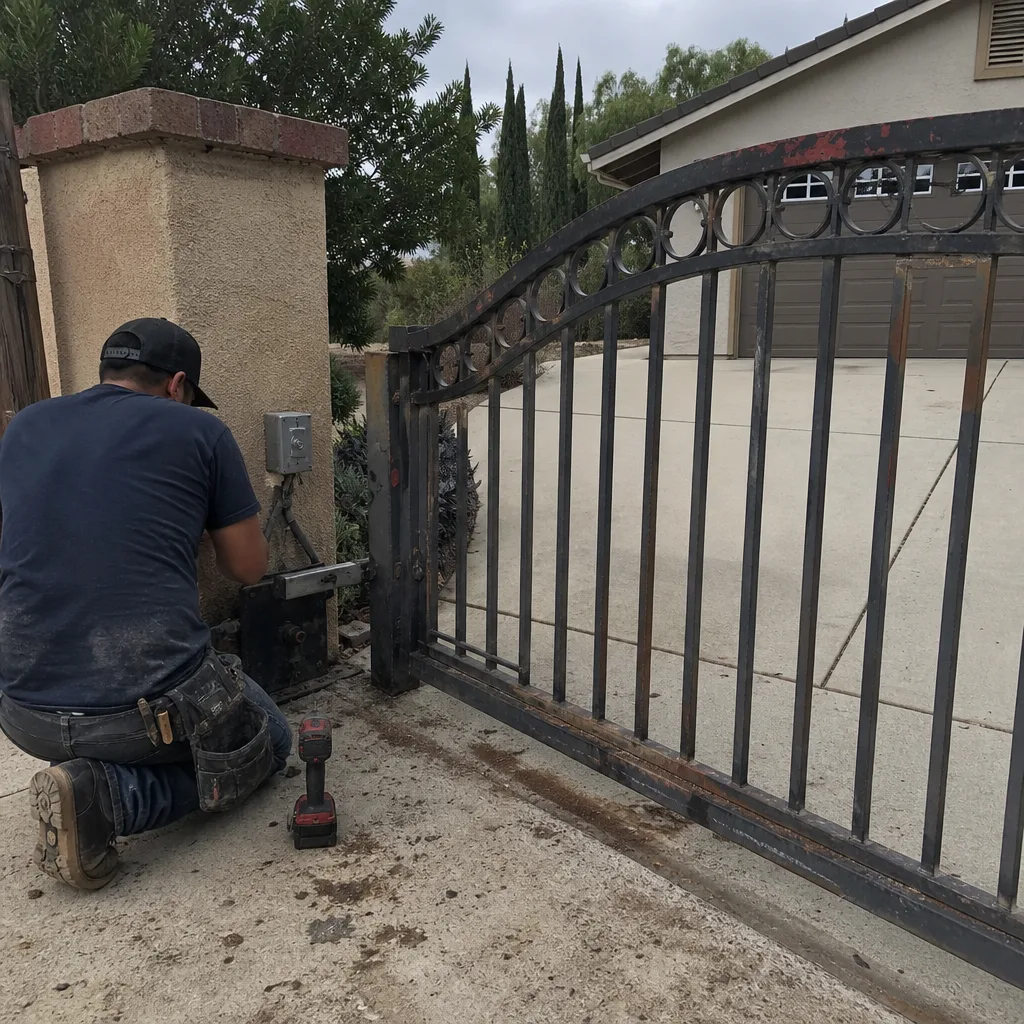 Before
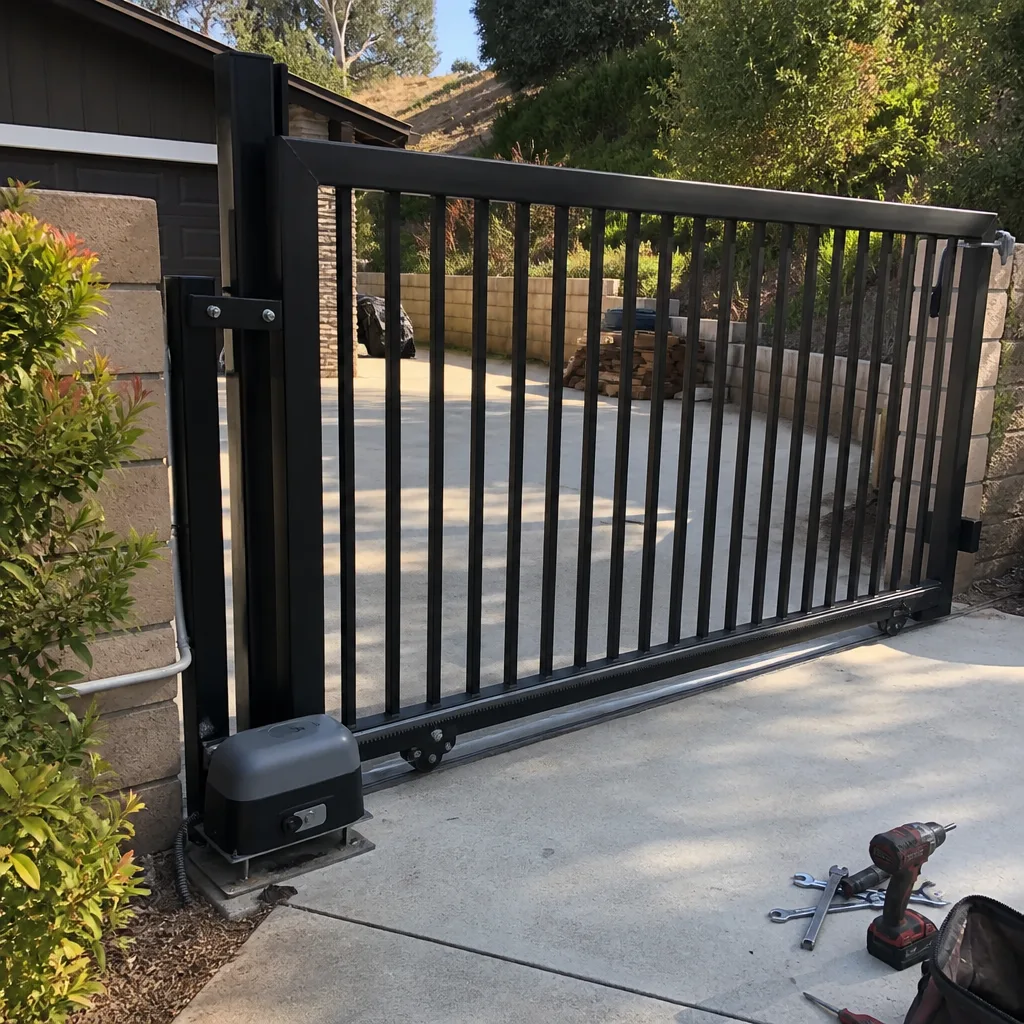 After
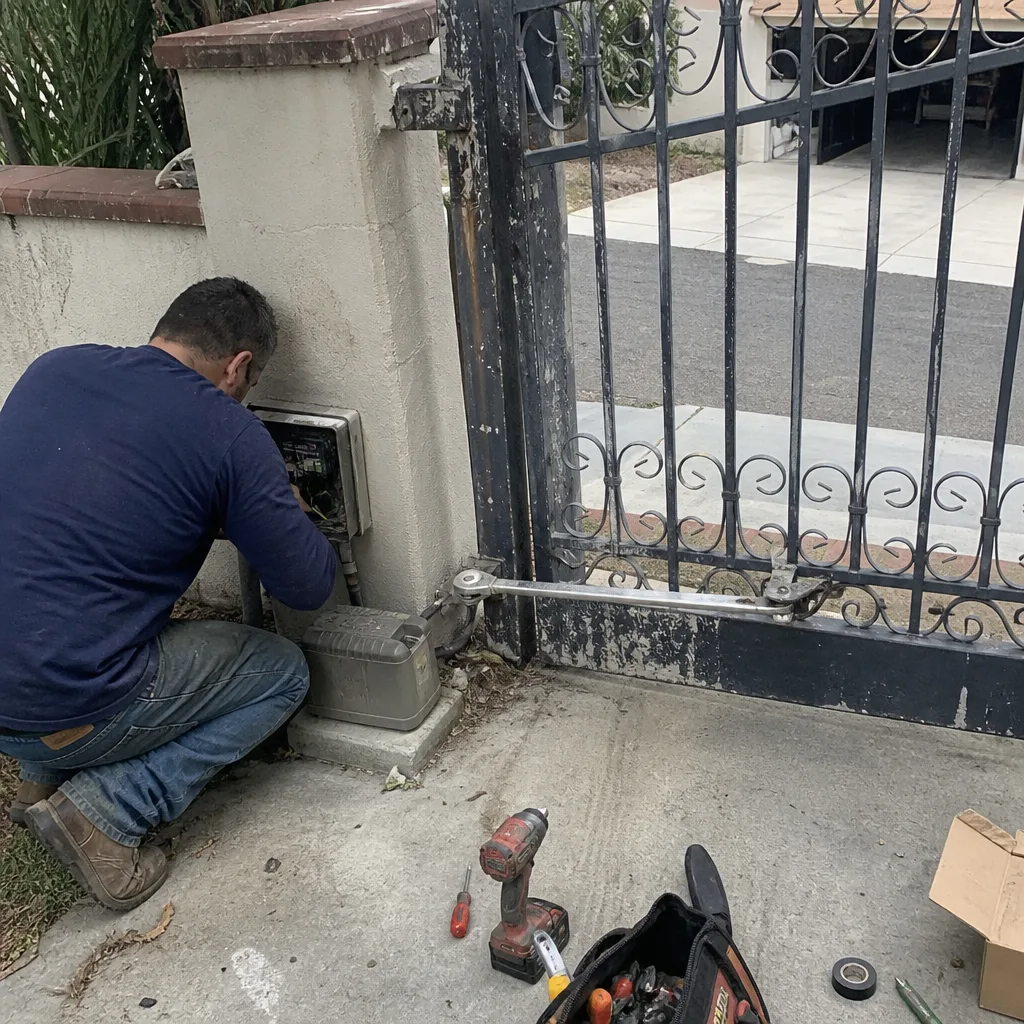 Before
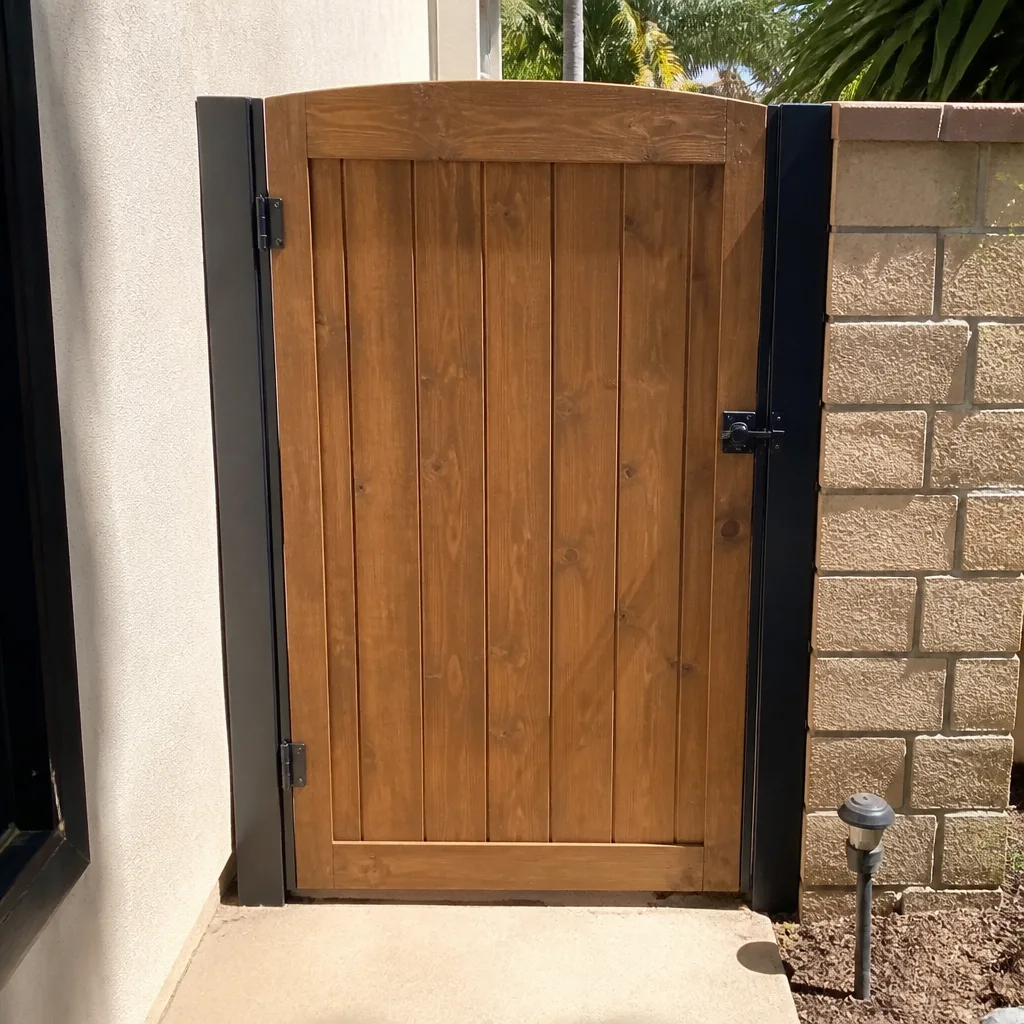 After
 Before
 After